
A loan write-off happens when a lender realises that the borrower won't be able to pay back the money they owe and takes the amount off their balance sheet. But this doesn't mean that the borrower doesn't have to pay back the debt anymore. For the borrowers, a write-off will hurt their credit score, may result in settlement alternatives, and could generate a tax liability. For the lenders, the write-off provides relief for reporting purposes, decreases tax liability, but will reduce profitability for the lender and require compliance with standards. Finally, a loan write-off is different from loan forgiveness, or the conditions under which the debt is waived entirely. Accounting standards, such as Ind AS, IFRS, and GAAP, influence loan loss reporting. Often, businesses will reserve an allowance for loan losses before writing off the amount. In summary, loan write-offs do provide relief for the lender's account, but also will impair financial soundness, debt performance ratios, and stakeholder confidence.
Most people in finance will be familiar with the idea of a loan write-off, but many borrowers or businesses do not understand the concept of a loan write-off. When a borrower is in default on repayment, the lender will generally write off the amount as not collectible, and labelled as a write-off on the lender's books. The accounting process usually allows lenders to adjust their financial statements, and reduce taxable income. It does not necessarily mean the borrower is free from paying off the debt. Put differently, the borrower owes the debt, and the lender could potentially come back to collect. For the lender, it is about getting financial statements in order and compliance with the rules. For the borrower, it means negatively impacted credit scores and future borrowing ability. In this article, we explore the meaning of a loan write-off, how it works, what it means to both parties, how it is accounted, and how it is different from forgiveness.
When a loan is made and a borrower does not pay the loan back, eventually the lender writes off the amount owed; this is known as a loan write-off. While this is a straightforward term, either party may have repercussions after the loan is written off.
In this article, we will cover what a loan write-off is, what it looks like to be on either side of the loan, and how it affects lenders and individuals. We will also explain loan forgiveness, debt relief, and credit scores, all in relation to financial wellness.
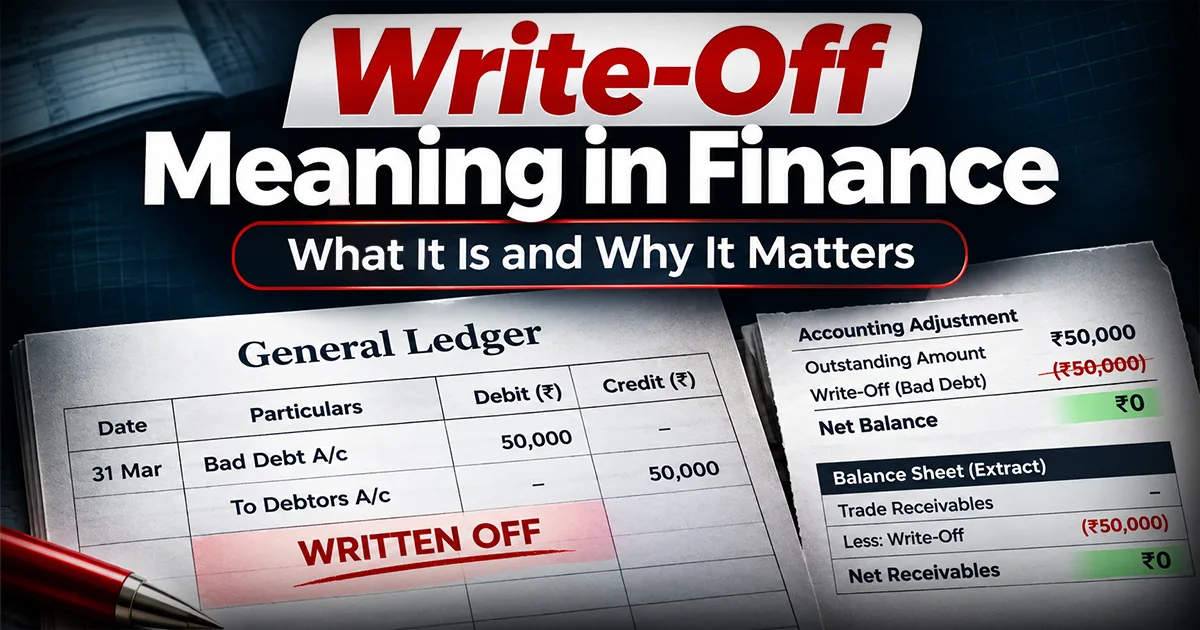
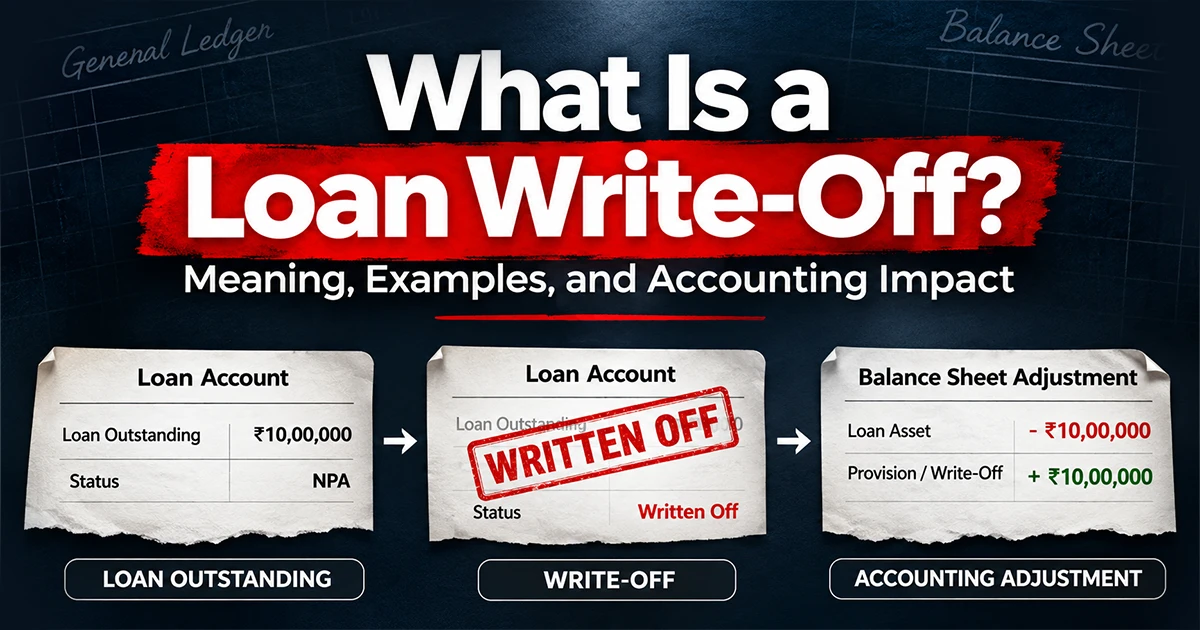
A loan write-off is when a lender decides to "recognise" that they will not be repaid in full. It is an accounting designation that will occur when the borrower has defaulted or is unable to pay the debt. The loan will be removed from the lender's balance sheet, which will help the lender reduce their taxable income; it does not denote that the loan is paid off.
In more basic terms, a write-off means the borrower cannot repay the loan in full. However, the borrower remains responsible for the loan, even if it is written off. A write-off is an accounting function, and not a complete discharge of the debt.
The process of writing off a loan generally starts when the borrower cannot make a payment over a period of time (generally, six months or longer). Lenders will try to recover the amount via various means, including collection before writing it off. The procedure is not the same throughout the institution, but it should look something like the following:
The borrower simply did not pay what was owed on the loan; this is usually due to financial problems, mishandling, or several other reasons. After missed payments, the lender decides the loan is delinquent.
Before writing off the loan, the lender will try to recoup the debt. This can involve phone calls, reminders or in some cases, hiring a collection agency to recoup debt from the borrower.
This will depend on the lender's position regarding how to recover the debt. If the lender has decided that recovery is not possible, they may write off the loan. The lender will remove the borrower from their balance sheet, which ends the collection process for the lender, but the borrower is still responsible for the amount owed.
The lender, in certain cases, will alter the loan or provide some form of relief, but not to the point of writing off the debt. In practical terms, this generally means extending the repayment term or reducing the amount owed overall (e.g., reducing a loan amount altogether).
For a borrower, it might feel like the debt has been discharged from their shoulders—if it has truly been discharged. However, it is important to understand that the discharge of the debt does not discharge the borrower.
Even if lender writes the loan off; the borrower is still responsible for paying the debt. The lender may use other avenues of collecting payment such as suing the borrower, or hiring a collection agency.
The most significant consequence of a loan write-off for the borrower is the effect on their credit score. The write off will be “reported” to the credit bureau, and in some cases, may stay on the credit report for years, which can hamper future.
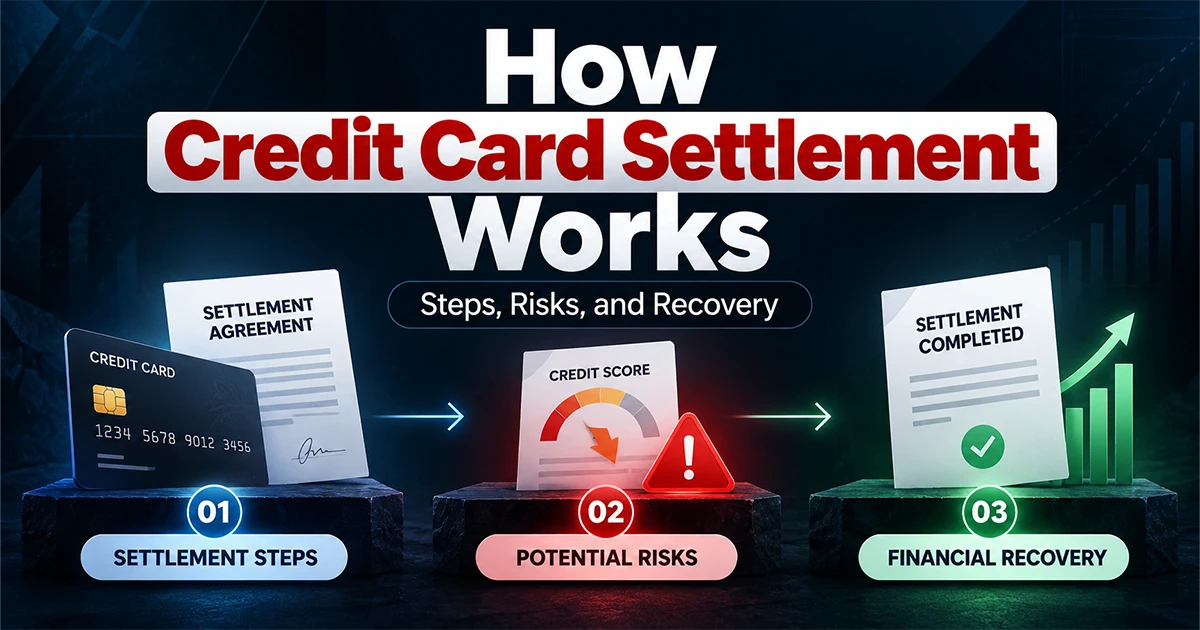
A borrower may be able to negotiate a settlement agreement with the lender after the loan has been written off. This could allow the borrower to pay an agreed upon lower amount and settle the debt altogether. We have lender policies, and the borrower fiscal situation may mix into that calculation.
Sometimes the forgiveness or write off of the loan are taxable income to tax authorities - among tax differs from country to country. Either way, borrowers should be aware they may be subject to paying taxes on that amount written off.
In the opinion of the lender, writing off a loan is a needed step to make their financial records tidy, especially when the debt is virtually unrecoverable. However, there is more to a loan write-off than simply writing off the debtor and removing it from the ledger.
For the lender, a loan write-off can provide accounting benefits (a useful thing, of which there are not many in a loan write-off situation). Properly written off debts or assets regarded as non-collectable can be removed from a lender's balance sheet. This improves financial ratios regarding loans and balances (meaning you can meet the percentage requirement of lending to lower-income individuals with a lower balance sheet). Lenders may also claim a non-collectable loan or debt as a tax deduction, further decreasing tax liability.
Although a write-off reduces the lender’s tax liability, it has implications regarding profitability. The lender remains in the business of collecting loans after all. A loan write-off indicates that the lender cannot realise the expected return from this loan. This financial report will affect the generally expected result of the lender.
In several countries, including India, financial institutions are required to follow regulatory standards when they write off loans. They have different guidelines to improve transparency and accuracy when they write off loans. For example, they may have to report to regulators, with a report that lists each loan that has been written off. This is again a consideration when the bank and business are considering lending in the future.
After the account is charged off, lenders can continue collection efforts through other means. They may pursue a civil action against the borrower, or may sell the account to a collection agency, or at some point, even propose a settlement. In some cases, lenders will continue to contact borrowers for many years to pay back the loan in hopes of recouping their loss.
A careful distinction should be made between loan forgiveness and loan write-offs, as they will have different effects on borrowers.
Loan write-off: This is simply an accounting practice by which lenders remove a defaulted loan from their balance sheet. The borrower is still responsible for repaying the loan. Therefore, a loan write-off never means the debt is forgiven.
Loan forgiveness: Loan forgiveness means that the lender or creditor will relieve the borrower of their entire debt. In certain cases, loan forgiveness can occur (e.g., student loans, some government loans) in cases when the borrower meets designated requirements to receive loan forgiveness (financial distress or public service work, for example).
A loan write-off is an accounting entry that serves to update the lender's records. It is not yet a charge-off because the lender still may have a chance of recovering if a loan is written off. Secondly, it also affects the balance sheet of the lender, specifically the lender has a lesser amount of an asset in the amount of an outstanding loan.
From a financial accounting perspective, a loan write-off is an element of observing non-performing asset (NPA) ratios for the lender. The loan write-off would require the lenders to write off "bad” loans, which ensures only loans that are likely to be paid back are reported on financial statements. The lender will be regulated is appraising loans to the write-off status category.
Prior to writing off loans, many lenders will consider other debt relief options that may assist a borrower in their loan repayment. These options may include:
The lender may offer to restructure the loan,, modifying the EMI or extending the tenure to a timeframe sufficient enough that the borrower can repay the debt.
In some cases, lenders will allow borrowers to settle the loan for a lesser amount. This is often the case when a borrower is in significant financial distress.
There are also financial counselling services that could assist borrowers in determining what options they have to work out a repayment plan without writing off a loan.
When bad debt accounts for any amounts owed to a company that are established as uncollectible, bad debt will arise with issued loans. With loans issued, bad debt will usually occur once a borrower defaults or simply cannot repay their debt. Businesses or financial institutions also need to determine whether to make proper adjustments for bad debt in their financials to account for the debt amounts so as not to expand the financial condition of the company.
Before writing off a loan, a company typically will create a provision for loan loss, also referred to as an allowance for doubtful accounts. This provision will serve as a cushion in the financial statements to acknowledge that some claims on loans may ultimately go bad. By establishing in advance a smaller amount of current profit to ensure all future losses are accounted for, an institution will have better representation of its financial position.
For example, if a company believes there is a chance that a given percentage of its loans will be unpaid, it will create a provision for those loans to cover any possible losses. When a provision is created, there will be an expense reported in the income statement, which collectively will reduce the company’s profit for the period. In the balance sheet corresponding entry, there is a liability that reduces the overall value of the company’s outstanding loans.
When a loss is determined, the academic organisation will write off the loan, and the institution will remove the loan from the books of the company. This is recorded as follows:
The balance sheet will reflect the write-offs' effects by reducing both the loan amount and the relevant provision for loan losses. In case the company developed a provision beforehand for bad debt, then the write-off is just the removal of the loan amount owing to it from the books.
For example:
Before write-off: Loans Receivable (Assets) = ₹100,000, Provision for Loan Loss (Liabilities) = ₹20,000
After write-off: Loans Receivable (Assets) = ₹0, Provision for Loan Loss (Liabilities) = ₹0
In situations where no provision has previously been taken, the write-off will affect both assets and equity. The loan receivable is removed from the assets, while the loss is recognised directly on the profit and loss statement.
When a loan is written off, it impacts the Profit & Loss (P&L) account directly to recognise the bad debt expense. If a loan loss provision had been established before, the bad debt expense would not hit the P&L as forcefully, since an expense had already been recorded in a previous accounting period.
If not, it would be a full expense in the P&L. A loan written off just stops the company from having that profit, and it formats the financial attainment regarding the bad debt.
For example:
Before write-off: Profit before tax = ₹50,000
After write-off: Profit before tax = ₹30,000 (if no provision was made)
Equity may also be impacted by the loan write-off, particularly if the loan was sizeable and no loss provision had been put aside beforehand. If a loan were written off without a prior provision, it would reduce retained earnings, which is part of shareholder equity, a direct expense.
Accounting standards regarding loan write-offs are contingent on different accounting standards, including Indian Accounting Standards (Ind AS), International Financial Reporting Standards (IFRS), and Generally Accepted Accounting Principles (GAAP). These standards provide instructions on the recognition, measurement, and disclosure of bad debts and loan write-offs in the financial statements.
Ind AS 109 (Financial Instruments) provides a framework for the establishment of the recognition of financial assets, including loans and the allowance for doubtful accounts.
IFRS 9 describes how financial assets are impaired and how entities would account for the loss of value in loans and receivables.
GAAP requires that an entity estimate the collectability of loans and, if necessary, create provisions for the potential loan loss, both of which subsequently reflected in the financial statements.
The loan write-off procedure must comply with accounting standards, which require the evaluation of an entity's business methods systematically for determining the write-off of a loan and the accounting for the provision for loan loss. This would require the evaluation and assessment of the loan portfolio on an ongoing basis and disclosure of the adjustments to loan portfolios and provisions based on the current economy, customer loan payment patterns, and history of defaults.
Loan write-offs are necessary for accounting for bad debts, but should be done with care. The impact of loan write-offs can have an effect on a company's profitability, liquidity, and overall health. Here are some key points to consider.
The timing of a write-off is relevant. In a perfect world, businesses would complete a review of their loans and establish a reserve for loan loss long before writing off a loan so that the write-off does not lead to a sudden loss of profit or equity.
Key performance ratios could potentially be impacted by a loan write-off. As a loan is written off, total assets will decrease. Profitability may also decline, either impacting or causing the perception in investors that a financially healthy company does not exist.
Depending on the jurisdiction and accounting practices, a write-off of a loan may provide an opportunity for a business to reduce taxable income. In other jurisdictions, the bad debt may be deducted from taxable income for tax relief. Tax treatment of the loan write-offs will differ based on jurisdiction. Therefore, it is important to consult with tax professionals.
When a sizeable loan has been written off, it is very important to include stakeholder participation of shareholders, creditors, and auditors so that there is transparency. So long as the financial statements provide clear disclosures pertaining to the reason for the loan write-off, the amount written off, and the foreseeable impact on future earnings, stakeholders will trust and have confidence in the business.
Write-offs of loans are significant for all parties in line with their individual financial management. From the perspective of lenders, write-offs provide transparency in their financial statements, tax accounting and tax forecasting, and regulatory treatment of the financial statements. The opposite is true for borrowers, as a write-off is not the cancellation of debt; it is simply part of one's total liabilities and will typically impact a credit rating and access to future borrowing capabilities. In addition, it illustrates the responsible use of loans, timely payments, and the discipline of finances. There may be some borrowers who are legitimately trying to restructure or settle a debt. However, businesses and lending institutions must recognise the expense of provisioning for questionable loans to protect a future long term. Finally, write-offs of loans should not be viewed as relief for borrowers; it is essentially a financial management process for lenders, and this is where better decisions for financials and repayment decisions permit a better understanding.
Que: Does a loan write-off mean my debt is forgiven?
Ans: No, a write-off is only an accounting change. You still have to pay the money back.
Que: What happens to my credit score if I pay off a loan?
Ans: It hurts your credit report and can stay there for years, making it less likely that you'll be approved for a loan in the future.
Que: Can lenders still get their money back after a write-off?
Ans: Yes, lenders can still engage collection agencies, sue you, or offer to settle even after a write-off.
Que: What is the difference between a loan write-off and a loan forgiveness?
Ans: A write-off is just a record-keeping action; forgiveness means that the borrower no longer has to pay back the amount
Next Post

Founded in 2015, Ahk Tips is a New Delhi-based financial advisor specializing in debt relief and loan management solutions.