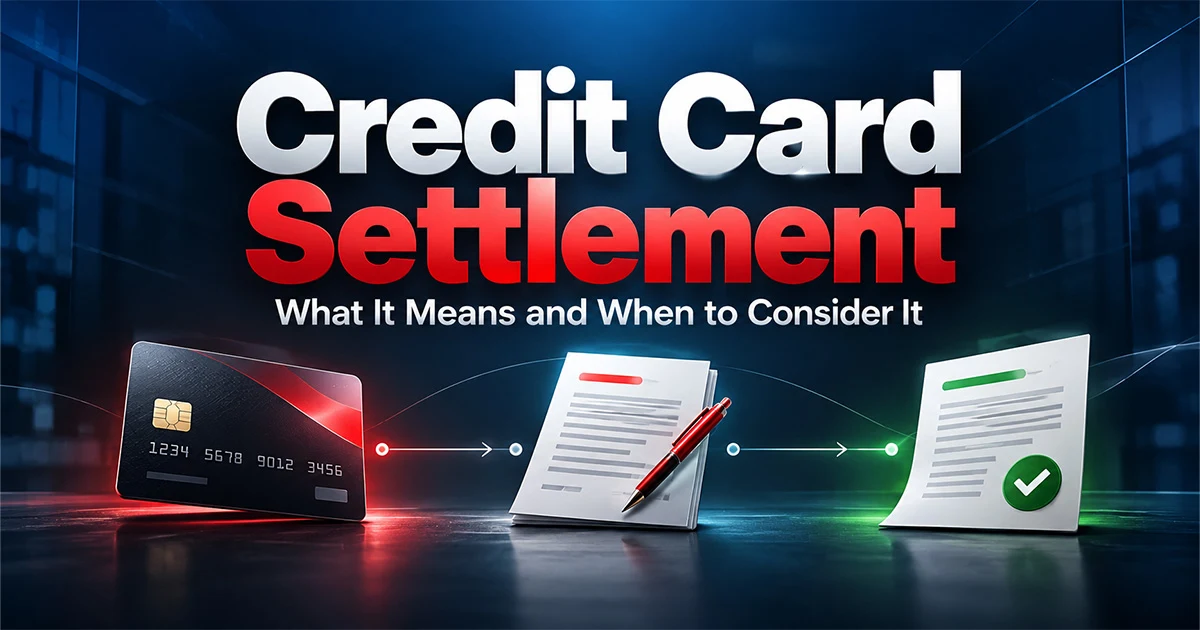

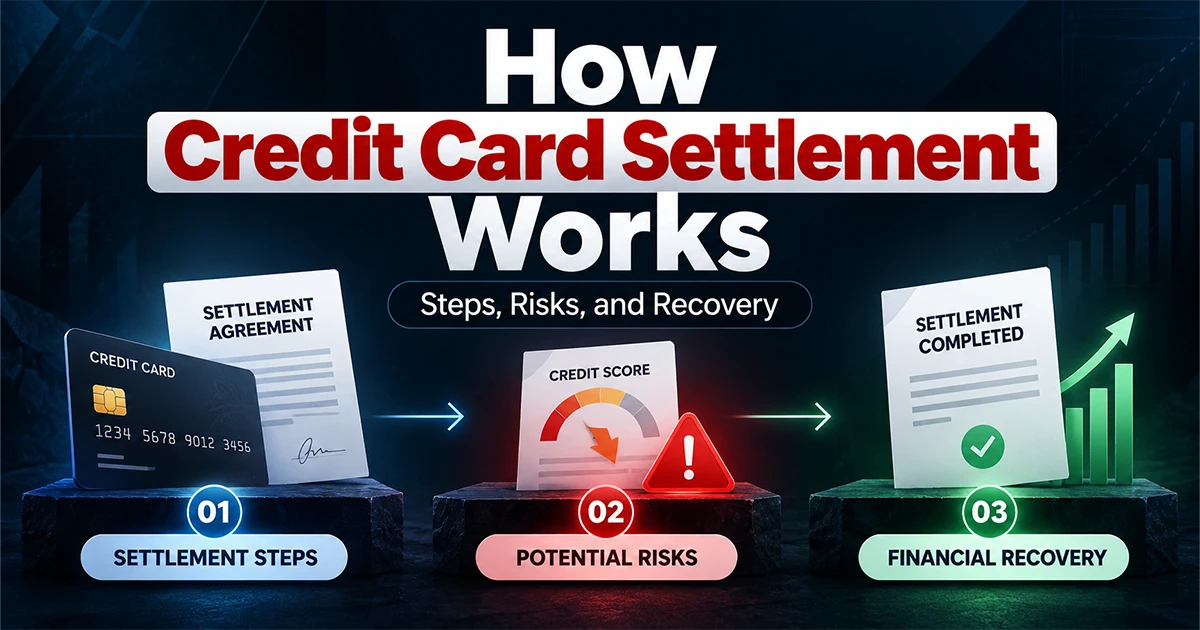

This article discusses how credit card settlement is done, the procedure step by step, and the dangers. Settlement refers to the process of negotiating with your creditor to pay a lesser amount of your debt, usually 30–50% of your total balance. It can be paid as a lump sum or in instalments. While a settlement temporarily relieves an enormous volume of debt and stops collection pressure, it also damages your credit score and can result in tax implications. The process involves analysing your money, contacting the creditor, negotiating, getting a written agreement, and paying on time. After settlement, the debt is "settled" on your credit report, which lasts for several years. To rebuild, you must rebuild your credit with timely payments, budgeting, and the occasional use of secured credit cards.
Credit card settlement is a solution that may prove useful to those who are unable to pay their full credit card bill. It allows you to negotiate with your bank or creditor to pay less than you owe. For most, it brings quick relief from high-interest fees, collection notices, or risk of legal action. However, the process carries serious consequences, including an adverse credit rating and possible tax liabilities. Before one goes ahead, it's useful to understand exactly how settlement is done, the dangers involved, and the steps to recover financially later. This manual takes the entire process apart—from finalising, payment, and negotiation to restoring your financial health—so you may make an informed decision on whether settlement is right for you.
Credit card settlement can be a viable option for individuals facing high credit card debt, as it provides an opportunity to reduce the amount owed through negotiations with creditors. Please be sure to fully educate yourself on how the process works before deciding if debt settlement is right for you. This guide will explain the process of a credit card settlement and provide an outline for anyone interested in proceeding with this option.
In a credit card settlement, you negotiate with your creditor to pay a reduced amount of the outstanding credit card debt. Essentially, rather than paying the credit card debt in full, you settle for a lesser amount. After you pay the agreed amount, the creditor considers the debt settled. While this can immediately relieve you of some debt, it usually carries longer-term financial ramifications, such as damage to your credit score. You can initiate the settlement process on your own by contacting the credit card company, or you may go through a third-party settlement agency. If you go through a third-party agency, they will charge you a fee and then negotiate your debt on your behalf.
Assessing your whole financial picture is the first step in the settlement process. You should carefully review the amount of debt you owe, the interest on loans, the monthly payments you make, and any fees associated with your credit cards. That way, you’ll know how much you owe and whether or not pursuing a settlement to lower your debt is a possible option.
Once a clear picture of your debt has been established, the next step is to reach out to creditors. If you're speaking with a credit card company, try to be up front about the financial situation that you are having. Most lenders and creditors are willing to work with someone who has money problems - especially if they think pursuing the settlement will give them more leverage than continuing to pursue the balance.
At this point, creditors will review your financial situation and then decide whether they are prepared to accept a reduced amount. Depending on the circumstances, they may suggest a settlement amount that would be a percentage of the total debt, sometimes in the 30 to 50 per cent range.
Settlement terms vary, too. Some creditors may ask that you pay the reduced amount in full, while others would allow you to make payments. Be sure to negotiate a settlement amount or structure that you can manage with your budget.
Negotiating is important here, particularly if you are doing it alone. Keep in mind that creditors would rather settle than risk you not paying them at all. Therefore, when you negotiate an amount, be firm (but polite) and don't hesitate to make a counteroffer if they propose a settlement that seems too high initially.
After you've worked out the details of the settlement, you need to figure out if you can make the payment. If you've agreed to a lump-sum payment, you need to be sure you have the money on hand. This can entail selling some of your things, borrowing money from family, or utilising part of your savings.
Some creditors may provide a payment plan to pay off the debt over several months if a flat sum is not possible. This can help make things easier, but keep in mind that some creditors may charge extra fees or interest on the sum that is left over. Before moving forward, always get the terms in writing.
You will need to make the deal official once everyone agrees on the terms. Get a written agreement with your creditor that spells out the details, such as the amount of the settlement, the payment plan (if there is one), and how it will affect your credit report.
You need to read the agreement extremely carefully to make sure everything is correct. Be very careful about how the creditor plans to tell the credit bureaus about the settlement. If you settle a debt for less than the entire amount, your credit record will usually show it as "settled," which can hurt your credit score.
Keep a copy of the settlement agreement for your records. This will be very important if any problems come up later.
Once you sign the agreement, you can initiate the payment as prescribed in the agreement. The payment can be either a lump sum or a series of payments; just make sure every payment is made as defined in the terms. If the settlement terms are not met, the settlement may be rendered void, and the creditor may seek other means of collection.
It’s a good idea to retain proof of payment – bank statements, or receipts, in case there is any dispute relating to whether the debt was settled. If proof of payment is available, it helps protect you in case the creditor says you did not meet the terms at a later time.
When the settlement is finalised, the debt is likely to appear on one of the Indian credit bureaus (CIBIL, Experian, CRIF High Mark, etc.) as "settled in full for less than the whole balance." This will hurt your credit score for a period of up to seven years. While this will negatively affect your credit score, it is generally better than doing nothing and letting the debt sit outstanding, which could include further interest and penalties.
There may be tax implications under Indian law. In some situations, the Income Tax department may treat the forgiven amount as taxable income. For instance, if you owe ₹1,00,000 and settle the account for ₹60,000, then the ₹40,000 forgiven may be treated as income, and you may be required to report it in your income tax return. This will be to determine the amount of tax you owe, so consult a chartered accountant or tax professional to get advice based on your circumstances, etc.
While the settlement may alleviate any immediate financial burden, it is important to keep in mind that rebuilding your credit and financial well-being will take time. Once your debt is settled, you can be focused on improving your credit score by always paying off any remaining bills on time, avoiding any new debt, and keeping credit card balances low.
One way to rebuild your credit is by applying for a secured credit card. These cards will require a deposit that will serve as your credit limit. By using this card in a responsible way, you can start to rebuild a positive credit history.
Over time, as your credit score improves, the once negative nature of your settled debt will fade, and you will be able to regain access to better, more affordable credit options.
Although credit card settlement can provide some relief, it does have some risks. One risk is a potential negative impact on your credit score. Also, in some cases, creditors might reject the settlement offer by the debtor. A potential tax consequence of settling your credit card debt is also important, as settling can be taxed on forgiven credit card debt as income.
Not all creditors may be willing to negotiate a debt. In some situations, a creditor may decide to sue the debtor for the remaining debt. Debt settlement agreements also have fees, generally when employed by a settlement agency, which could eat into your total savings instead of saving you money with total debt reduction.
Credit card settlement occurs when a debtor agrees to pay a lesser overall amount to the debtor. Credit card settlement usually occurs if an individual is unable to fully pay and has otherwise agreed to a lesser total payment to satisfy the debt. While settling will relieve the debtor from the overwhelming total debt that a debtor otherwise could not afford to satisfy, there are risks associated with this, such as certain recovery steps to take after a settlement occurs.
One of the most significant risks of credit card settlement is its negative impact on your credit score. When you settle a debt for less than what you owe, your creditor will likely report this to the credit bureaus. This can cause a sharp decline in your credit score, which could make it more challenging to secure loans, mortgages, or even other credit cards in the future.
The reduction in your credit score may vary depending on your original credit standing, but the drop can be substantial, often falling by 100 points or more. Over time, your score may recover, but this can take years, depending on how long it takes for you to rebuild credit.
In India, settling credit card debts may incur tax implications. If your creditor views any of the debt as forgiven, that debt may be treated as taxable income with the income tax department, meaning you may be reasonably taxed on that amount, and this could put additional strain on your personal finances.
For instance, if you settle a debt of ₹1,00,000 and your creditor agrees to forgive ₹30,000 of the debt, that ₹30,000 could be considered income and added to your annual taxable income. This means that when you file your taxes, you may owe taxes on the forgiven amount. You may have some exceptions, such as insolvency, if you can prove that your liabilities exceed your assets, which may exclude the forgiven amounts from any tax burden.
While settling a credit card debt may take the debt obligation away, that does not necessarily mean all of your financial issues are over. If you have not paid before, and there was a judgment against you, your creditor can still attempt collection through a collection agency or attempt to collect from you. In some cases, creditors are aggressive about collecting money owed before settling. In some cases, a creditor may choose to garnish wages or obtain a money judgment against you in court.
It is highly advisable to monitor your credit report closely after settling the bill, to verify that the debt was settled and marked as "settled" or as "paid in full." If there is a billing mistake, you should contact the creditor directly, and make sure to update them with Experian, Equifax, or TransUnion of the updates you made. Checking your credit report routinely can help identify any other potential issues that could negatively affect your financial health and keep it in good standing.
Although a credit settlement might damage your score, with a little time and effort, you will be in a position to make your score go back up. First, make sure that you pay all the remaining debts you have on time, and that you keep your credit utilisation low; once again, this shows creditors that you are working towards improving your credit claims. You can also consider applying for a secured credit card, which means you would likely need to make a deposit to have a limit established on the card. If you choose to go this route, you would need to use the card and pay it in full every month, etc.
One of the most effective ways to bounce back from a credit card settlement is to improve your budgeting habits. Start by preparing a budget that identifies your income and all of your expenses, including any debt payments. While it may take time to adjust your spending habits, following a budget will help you stay out of credit card debt in the future and remind you to make timely payments to your financial obligations.
Although there are some great consumer resources for dealing with debt out there, if you don't know what to do next after a credit card settlement, or would like professional insight, consider talking with a financial adviser or credit counsellor. There are resources in most communities that can provide insight into how to improve your credit and avoid issues in the future. Professional insights may also give you guidance on managing tax obligations or other legal issues you experience through the credit card settlement process.
Credit card settlement can assist someone who is heavily indebted, but it is not a light undertaking. When settling your debt, you can take a break, reduce the total of your debt and get some distance to think for yourself, and deal with other people. However, it will ruin your credit for seven years, you could have tax issues, and you will have limited options for borrowing secured and unsecured loans. If you are certain you wish to pay off a debt, negotiate in writing to pay less than you originally owed, and pay on time.
You may be able to pay off the debt and repair your credit score simultaneously! Additionally, you may avoid being back in the same financial mess by paying your payments consistently, keeping your credit card balances low, thoughtfully applying for new financial products, and developing a healthy budget. If money management is incredibly difficult, please reach out to professionals who can support you with your finances and your emotions. If you do it well, hand it off, and settle, it could be the start of regaining control and long-term stability.
Que: What does credit card settlement mean?
Ans: It entails talking to your creditor about paying less than the whole amount you owe to end the account.
Que: Does settlement harm my credit score?
Ans: Yes. The account will be reported as "settled," which will hurt your credit score for a few years.
Que: Can creditors refuse settlement?
Ans: Yes. Not all creditors will accept a settlement; some may choose to take you to court instead.
Que: Do I have to pay tax on the forgiven debt?
Ans: Yes, a lot of the time. It's a good idea to talk to a tax professional because the forgiven part is usually considered taxable income.

Founded in 2015, Ahk Tips is a New Delhi-based financial advisor specializing in debt relief and loan management solutions.