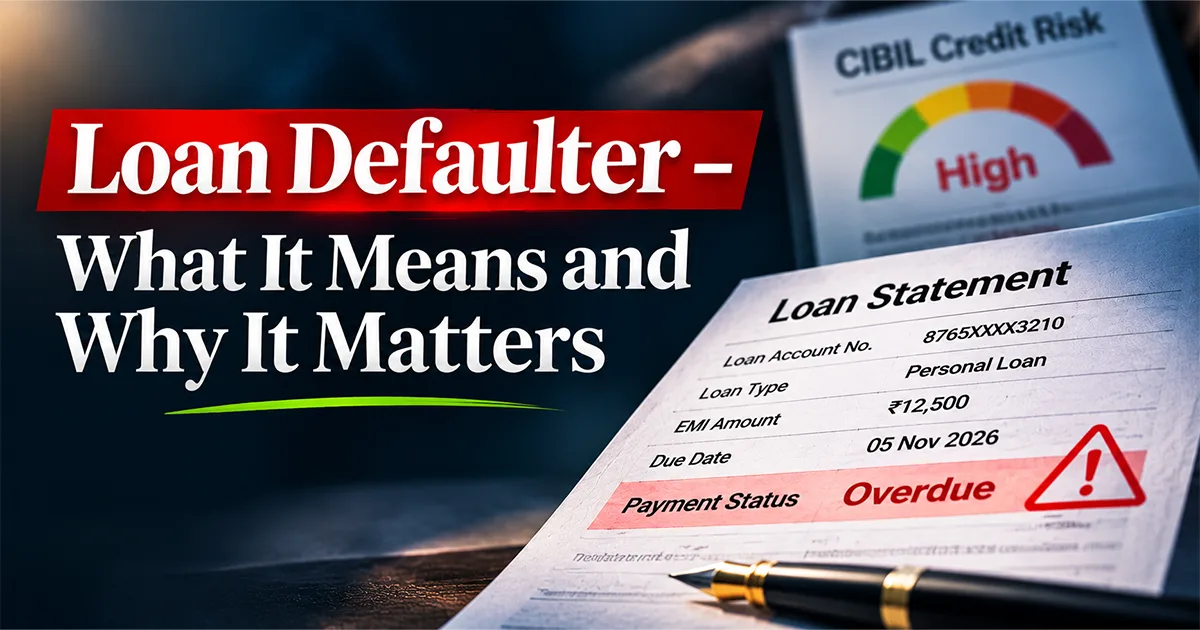

Loan default occurs when a borrower does not make repayments in accordance to agreed-terms and conditions which pose severe financial implications. Failure to make several payments on borrowed funds like credit cards, personal financing or mortgages may lead to punishment, hurt your credit score, phone debt collector, and even lawsuits. In the case of secured loans such as home loans or car loans, default can lead to loss of security. The long run effect comprises of the inability to acquire new loans, increased interest rates, and emotional strain. Nonetheless, default on a loan can be circumvented through proper planning, budgeting, debt consolidation, and communication with lending entities. Borrowers can also make their debt worthwhile and safeguard their finances by being disciplined and getting professional financial advice.
Loan default happens when you are unable to pay on your lender as per the terms in a contract. This may occur using personal loans, credit cards, home loans or car loans. Failing to repay a loan can lead to very dire results like penalty, bad credit rating, callings, or even lawsuits. In the case of secured loans, lenders are able to reclaim property where the borrower is not able to repay the loan after putting the house, car, or gold as security. The default of loans is not only a financial but also an emotion-inducing factor and can severely impair future lending. It is highly significant that one knows what is loan default, the manner of occurrence as well as the way of avoiding them to any debt manager. Loan default can be avoided and financial health can be ensured with help of appropriate measures.
A loan is in default if a borrower does not pay back as agreed and serious financial consequences for the borrower are possible. That can occur if you fall behind on payments in a row, don’t follow the repayment plan or secretly let your lender down regarding your financial situation. Loan default can mean various things based on the type of loan, and terms associated with it in a particular agreement. For example, skipping one or even two payments on a personal loan or credit card could be considered a default, but when it comes to a mortgage or car loan, default may not set in until after several missed payments.
Whether you default on a loan it can have serious financial repercussions or a long term consequences on your credit score. We will see some of the actions, which may occur when you default on a loan:
Among the short term effects of defaulting on loans is late fees and some penalty interest charges to your balance which might be permanent. Most lenders charge on late payments and this may add to the principle sum. These charges may vastly increase your debt, and the loan is even harder to pay.
One of the most vital considerations by the lenders in determining your creditworthiness is your credit score. The default of a borrowed amount may affect your credit rating greatly, and in many cases it would be reduced significantly. Because the credit score is lower, which means you are more risky, it might become much more difficult to take out a loan in future, and in case you will be approved, you will receive a higher interest rate.
The default of a loan is normally a lasting burden on your credit score as it is carried with you up to seven years. The time the loan has been defaulting and the credit score you had before will determine the severity of the harm it will cause to your credit score. And, on the other hand, the effect might not be so dramatic in case your credit score is already low. But in case you had a good credit rating a default on a loan would substantially reduce your rating and getting good terms in the future will become difficult.
After defaulting on your loan, the lenders normally turn over the bankruptcy to collection agencies. These agencies are contracted to collect the outstanding balance and in most cases, they employ forceful methods such as frequent phone calls and threatening mail. Debt collection agencies are very emotional because they might be relentless and frightening.
The loan defaulters will be subject to the law in certain instances. In case, the lender feels that they may not get the debt by exercising the collection, they may sue the borrower to secure a judgment. In case the court in favor of the lender, the borrower may be subjected to wage garnishment, bank accounts levies, and even asset seizure based on the laws present in their respective countries.
In case of secured loans including mortgage, car loans or gold loans, failing to pay back the loan can result in forfeiture of the security. It implies that the unpaid debt can be compensated by the lender seizing your property, car, or gold. Babylonian foreclosures may make you lose some valuable items and cause a serious damage to your fiscal status.
The monetary effects of defaulting on loans are more than short-time fines and can affect the general financial well-being. The following are some of the long term effects that you can get:
When you fail a loan, then it becomes harder to borrow more. The lenders are afraid of loaning money to people whose records of loan default exist since they regard them as poor credit borrowers. You will still risk being challenged with worse conditions like higher interest rates and stronger conditions even after you qualify to obtain a loan.
Your insurance premiums can even be affectedin some instances because of loan default. An illustrative case is that some forms of insurance like mortgage protection or auto insurance can be pricier should the insurer consider you as a greater risk because of your financial background.
Pressure to handle default of loans may emotionally cost a lot to an individual. The constant company of debt collector calls, the threat of being sued, and having to fear seeing your credit score drop will be emotionally distressing. It is able to impact on your overall well being, relationships and mental health.
Although the implications following loan default can be dire, there are ways in which avoiders can evade loan default to save their financial destiny.
The initial aspect of preventing the default of the loans is the establishment and management of a realistic budget. Monitoring your income and expenditure will help you to ensure you have your loans repaid within the right time. By paying off debts, particularly those with high interest rates, you can also keep up with the game.
In the case of financial problems and the fear of defaulting on any of the payments, you need to notify your lender. Various financial institutions provide services of restructuring or debt wrapping, particularly where there is real distress. By clarifying your case at the outset, you can possibly secure better conditions e.g. a reduced temporary payment or a longer repayment schedule.
Debt consolidation may prove to be useful in case you have a series of loans on which you are having difficulty making repayments. Debt consolidation gives you the opportunity to pool several loans into one loan with one payment per month. This may ease your pocket burden and reduce the management of your debt.
To individuals who are deeply in debt, professional advice is the way out as they can be guided on ways of clearing the debts. The services of financial advisors or credit counseling can assist you in creating a course of action to reduce a debt, negotiate with lenders, and better your financial conditions.
Debt settlement or debt relief services can be a good solution in the situations when you have failed to make the payments. These services also have the effect of negotiating the overall amount of debt that can be owed to the creditors. It is however necessary to deal with reliable businesses because some debt relief businesses are excessively costly or deliver unrealistic claims.
A loan default occurs when a borrower doesn't pay back a debt according to the terms of his or her loan contract. The ramifications of default are significant, and they could include a hit to your credit score, extra debt in the form of penalty charges and interest fees and even a lawsuit. Preventing default is key to financial health, but doing so takes some careful planning, discipline and proactive steps. In this post, we would look at tips on how to manage your debt and keep up with your loans.
One of the best ways to prevent loan default is having a sound budget. When you keep tabs on how much is earned and spent, you will know exactly how to budget so that there will be money for loan repayments. And making debt repayment a priority in your budget is key. Concentrate on paying off the highest interest loans first, so you get out of debt more quickly. Reducing non-essential spending can also help there be more money to put toward loans. By consistently sticking within your budget, you won’t miss payments consisting of the principal and interest that keep you on schedule and out of default.
Easy Automatic payments are one of the ways to keep pace with your loans. You will eliminate the possibility of paying late by making automated payments through your bank account. This service is available at most lenders who will enable you to make regular payments at your designated days of payment. With this system you will not miss the payment as you will forget or become busy. The only thing you need is to ensure you have enough money in your account to avoid overdraft charges that may have an impact on your financial capability to continue making payments.
Loans are not fundamentally equal and some of them are expensive. Debts with a high interest rate such as those on a credit card can pile up so fast and it becomes even worse to control the debt. This is by prioritizing on settling high interest loans before taking up other loans so that you will pay a lower total amount of interest and in the process you will be a step closer to paying off your debt. When you have paid off your high-interest debt, you can divert that money and pay off other loans. The debt avalanche technique is called an avalanche strategy because it may be more efficient than just paying the minimum on all borrowed funds.
In the event that you are experiencing difficulties in making loan repayments, do not delay any longer. Your lender needs to be contacted as early as possible. Most lenders are flexible in their loan arrangements, which include rearranging the loan, extending its payment period, or implementing a temporary payment stoppage when an individual or firm is financially crippled. Being forward-looking and honest with your lender might ensure that you do not default as you have more affordable payment alternatives. Lenders will also tend to be accommodating to borrowers who demonstrate the desire to work out of their financial problems.
When you have several loans that you have found it hard to service all of them, then it is possible to consider consolidating or refinancing the normal loans. Debt consolidation lumps up multiple loans into one loan that is, in some lowering your monthly payments, as well as, in some cases, decreasing the interest rate. Refinancing, as another concept, is taking a loan in a low interest rate to repay the old loan. The two strategies are able to make your loan more manageable through repayments, but they must be thought through and your financial status must be comprehended. The available options have the potential to decrease the burden of having multiple loans and simplify loan avoidance.
Getting additional debt when one is already muddled in the existing debt may increase the same. Piling new loans to the financial burden raises the risk of default as a result of default. When you have to take an asset, make sure it is a debt that is required and that you will be able to cover the installments. An evaluation of your financial state should be done before increasing debt, understand that it will not pressure your budget. Not only to avoid any new debt will save you the trouble of trying to pay the current loans and will help avoid complications.
Being discipline in your finances is an important step to escaping default on your loan. The fewer irregularities you have in terms of paying your money at the right time and according to the repayment schedule, the higher the likelihood of remaining on track with your loans. Look at your budget regularly, keep track of your expenditures and modify it when necessary so that you can be utilizing the financial assets to the best of your ability. Remaining coherent with such practices not only means you prevent the default, but also this goes into the creation of a healthy credit profile.
The default of a loan is a significant financial matter that may potentially result in long-term negative effects of credit report, accumulation of debt due to fines, and further sanctions or even bankruptcy and declaration of assets. It does not only have an impact on future borrowing capacity but also creates emotional strain and financial strain. The silver lining is that, responsible planning can help avoid loan default very easily. Preparing a budget, repayment priorities, no new debts, and regularity to payments are major measures. In case it is difficult to pay back, one can contact lenders or seek the solutions of debt consolidation and settlement. Through discipline and proper time management, borrowers will be able to use loans effectively, prevent default and be able to take future without fears.
Que: What is a loan default?
Ans: Loan default is the case when a borrower doesn’t repay the loan according to t mutually agreed dates.
Que: How can the credit score be affected by a default on loan?
Ans: It reduces your credit score severely and will stay in your report for at least 7 years.
Que: Can one be sued over a loan default?
Ans: The lenders have the right to pursue legal remedies for a loan in default, which could include garnishment of your wages or seizure of your assets on secured loans.
Que: What should I do so I don't default on loans?
Ans: Budgeting, paying on time, speaking with lenders and considering debt consolidation or settlement.
Next Post

Founded in 2015, Ahk Tips is a New Delhi-based financial advisor specializing in debt relief and loan management solutions.