
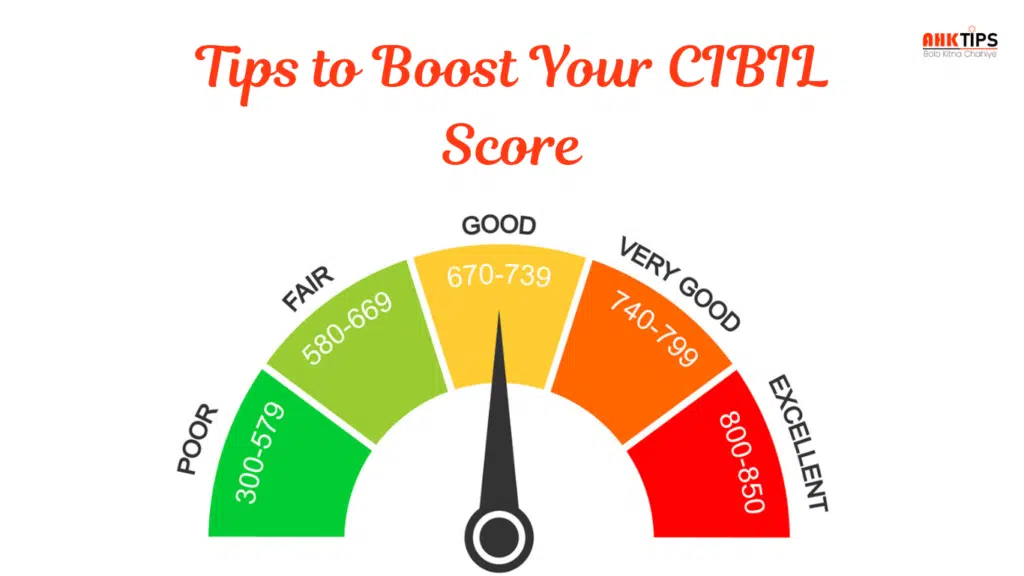

CIBIL Score is a financial number that reflects your creditworthiness. This score determines how eligible you are to get a loan in the future. When you are unable to pay a loan in full and settle the loan by agreeing with the bank or NBFC, it is called a “Settlement”. This process gets added negatively to your CIBIL report, which reduces your score and may make it difficult to get a loan or a CIBIL Score in the future.
But the good news is that even after settlement, your CIBIL Score can be improved again. For this, you have to adopt some important habits—like paying all EMIs and bills on time, avoiding excessive credit use, getting the mistakes in the old report corrected, and taking small loans and repaying them on time. Apart from this, you can also strengthen your credit history by using a Secure CIBIL Score.
The process of improving the score is not a matter of one or two months, but it requires consistency and discipline. If you move ahead with proper financial planning for 6 to 12 months, your CIBIL Score definitely improves.
In today’s time, if you want to take a loan, need a CIBIL score or need any kind of financial help, then banks and financial institutions first check your CIBIL score. This score is based on the repayment history of your old loan or your CIBIL score. If you have paid your loan installments on time, then your score is good, but if you have “settled” a loan, then it can have a bad effect on your CIBIL score.
Settlement means that you request the bank that you cannot repay the entire loan, so the loan should be closed by paying some part. The bank may agree to this and put your loan in “settled” status. Even though this reduces the burden of your EMI, it creates a negative image on your credit history. In the future, when you go to take a loan from another bank, this status of settlement stands like a wall in front of you.
Improving CIBIL Score is possible, but it requires a little patience, the right strategy and regular discipline. You have to bring transparency in your financial behavior, start with small steps and understand how each step can improve the CIBIL Score. Whether it is the right use of credit card, paying bills on time or talking to the bank to correct an old mistake – everything is part of this process.
In this article, we will know in detail what are the 10 easy and effective ways to improve your CIBIL Score after settlement. We will tell you how to check your credit report, get it corrected if you find any mistakes in it, take new credit responsibly, and gradually take your score to the height again.
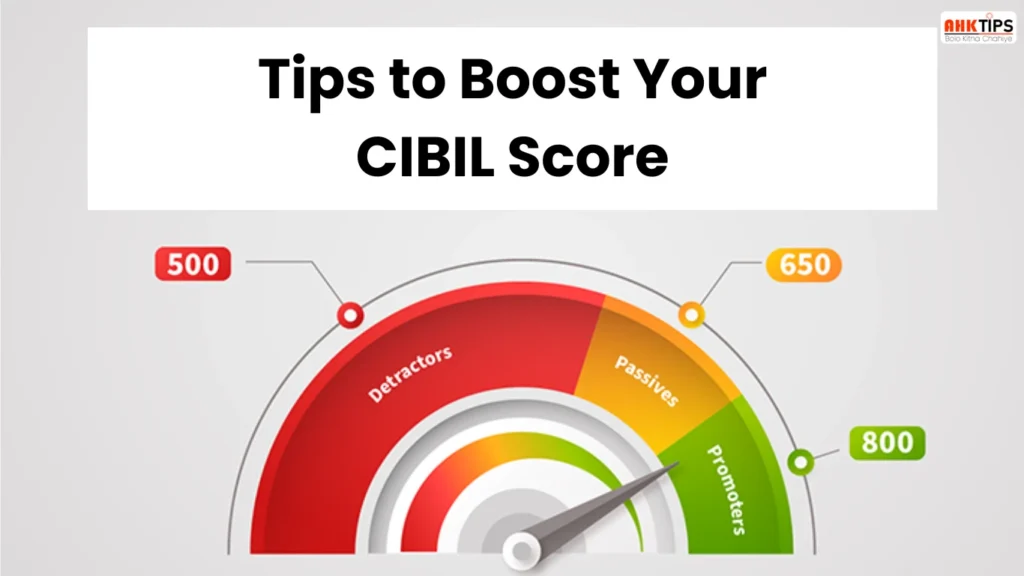
CIBIL Score is a three-digit number that tells how you have used the loan or CIBIL Score earlier. We can also call it the report card of your credit behavior. This score ranges from 300 to 900, and the higher the score, the better it is considered.
If your score is 750 or more, then the bank believes that you repay the money responsibly, and you can easily get a loan or CIBIL Score. But if the score is less than 600, then the bank suspects that you have not repaid the loan properly earlier, and they hesitate to give you a loan.
This score is made on the basis of your credit report, in which it is seen when you took the loan, how much you took, whether you paid the EMI on time or not, how many active CIBIL scores you have and how you used them.
Loan Settlement is a process in which you negotiate with your creditor to forgive a part of the outstanding amount on your Loan by making a lump sum payment. It is an agreement that you make with your card issuer as a last resort when you see that your Loan debt is increasing.
This can happen due to many reasons, ranging from unnecessary spending to careless spending habits. When your debt increases, the interest on it also increases, which can make it difficult for you to repay the outstanding amount. If you do not see any way out of this, then you can recommend a Loan Settlement.
Let us know what documents are required for a Loan Settlement.
1. ID Proof
2. Address Proof
3. Income Proof (if required)
4. Loan Statement
You will have to provide the Loan statement to give the correct information about your outstanding balance. The bank can also generate this statement itself, but sometimes they ask you for a copy of it.
5. Settlement Request Letter
If you are approaching the bank for settlement on your own, you will have to give a written Settlement Request Letter in which you can explain:
6. Settlement Offer Letter given by the bank
When the bank agrees to the settlement, they give you a Settlement Offer Letter. Read it carefully and confirm the amount and terms mentioned in it.
Below are some steps that should be followed before a Loan Settlement:
Below are some common reasons:
If you are unable to pay your Loan dues and are troubled by heavy interest rates, a Loan Settlement can be a possible solution. Under this process, the bank or Loan company can waive off part of your total outstanding amount and give you the option to make a lump sum payment (One-time Settlement). However, this can affect your CIBIL score, so adopt it only as a last option.
A settlement can hurt your credit score. The impact can be seen in the following ways:
When you settle a loan or CIBIL score, that is, instead of paying the full amount, you settle the loan by paying a small part of the amount with the bank, then this adds a “settled” status to your credit report. This shows the bank that you did not pay the full amount, due to which the CIBIL score falls.
But don’t panic – you can improve this score again. With the easy methods given below, you can gradually improve your CIBIL score again:
1. Check your credit report
First of all, see your CIBIL report. Check whether the settlement information is recorded correctly or not. If there is any mistake, then immediately file a complaint with CIBIL and get it corrected.
2. Change the settlement to “Closed”
If you can pay a little more after the settlement, talk to the bank and get your status changed from “Settled” to “Closed” by paying the remaining amount. This will have a very good effect on your score.
3. Take a new small loan and repay it on time
If your situation has improved, take a small personal loan from a bank or NBFC and repay it on time. This will improve your CIBIL Score as it shows the bank that you are now trustworthy.
4. Use the Credit Card Properly
If you can get a secured credit card (card against FD), then take it. Pay its bill on time and do not spend more than the limit. This will improve your credit history.
5. Repay the old dues
If any other outstanding amount is visible in your report, then repay it quickly. This strengthens your credibility.
If you want to take a loan or are thinking of applying for a CIBIL score, then, first of all, banks and financial institutions look at your CIBIL score. If the score is good, then the loan is also easily available, and the interest rates are also low. But if the score is low, then the loan may be rejected. In such a situation, you must improve your CIBIL score.
So let’s know the best and effective ways to improve your CIBIL score:
1. Pay EMI and CIBIL Score bills on time
Your CIBIL score depends most on whether you pay your EMI and card bills on time or not. Even a single late payment can lower your score. Therefore, it is most important to pay on time.
2. Use less of CIBIL score limit
Using more of the credit limit you have got shows CIBIL that you are more dependent. Try to use less than 30% of the limit.
3. Do not apply for more than one loan/card at the same time
If you apply for a loan or CIBIL score repeatedly, it leads to many “hard inquiries”, which harm the score. So apply wisely.
4. Maintain old credit history
Do not close the old CIBIL score or loan account that is active and you pay it on time. This increases your credit age, which is good for the score.
5. Check your credit report regularly
There may be some mistakes in your report, like an old loan that is still showing as “outstanding”. Identify such mistakes and file a complaint with CIBIL, and get it corrected.
Let us know what the benefits of doing a Loan Settlement are:
Let us know in detail what the disadvantages of doing a Loan Settlement are.
CIBIL Score is a mirror of your financial condition. This score tells how responsibly you have paid your loan and CIBIL Score till now. If your score has fallen due to any reason—such as loan settlement, late payment, or high credit usage—then there is no need to panic. The score can be improved again, but it requires time, patience, and discipline.
If you start paying your EMI and CIBIL Score bills on time, use only the minimum credit limit, and avoid applying for loans repeatedly, then gradually, your score can improve again. Also, if there is any mistake in your report, then it is also important to get it corrected. Some people also improve their score by using a Secure CIBIL Score.
It is important to note that the score does not improve in a day, it requires continuous efforts for 6 to 12 months. A good CIBIL score is not only important for loans or CIBIL score but also for your future financial plans. Therefore, by adopting financial discipline, you can improve your score and become a financially strong and reliable person.
Que: Why CIBIL Score drop after settlement?
Ans: When you “settled” the loan, the bank took it as a partial payment and not as full payment. It indicates your credit behavior as poor, which drops your CIBIL Score.
Que: Does the IBIL Score increase after settlement?
Ans: Yes, if you make EMIs and bill payments timely in the future, utilize credit limit judiciously, and form new credit habits, the score will improve slowly.
Que: How is a settlement different from full payment?
Ans: Full payment implies that you have paid the entire loan or outstanding balance, whereas settlement implies that you have paid some amount as per the agreement with the bank, which is not a full payment.
Que: Can a settlement be deleted from the CIBIL report?
Ans: Once the Settlement is included in the report, it stays for 7 years. But you can attempt to change the status to “Closed” from the bank’s side, but that also varies according to the bank’s policy.
Que: How long do I have to wait for the score to pick up after Settlement?
Ans: If you have a good financial history for 6 to 12 months consecutively, the score can get better over time. But it varies with the report of an individual.

Founded in 2015, Ahk Tips is a New Delhi-based financial advisor specializing in debt relief and loan management solutions.