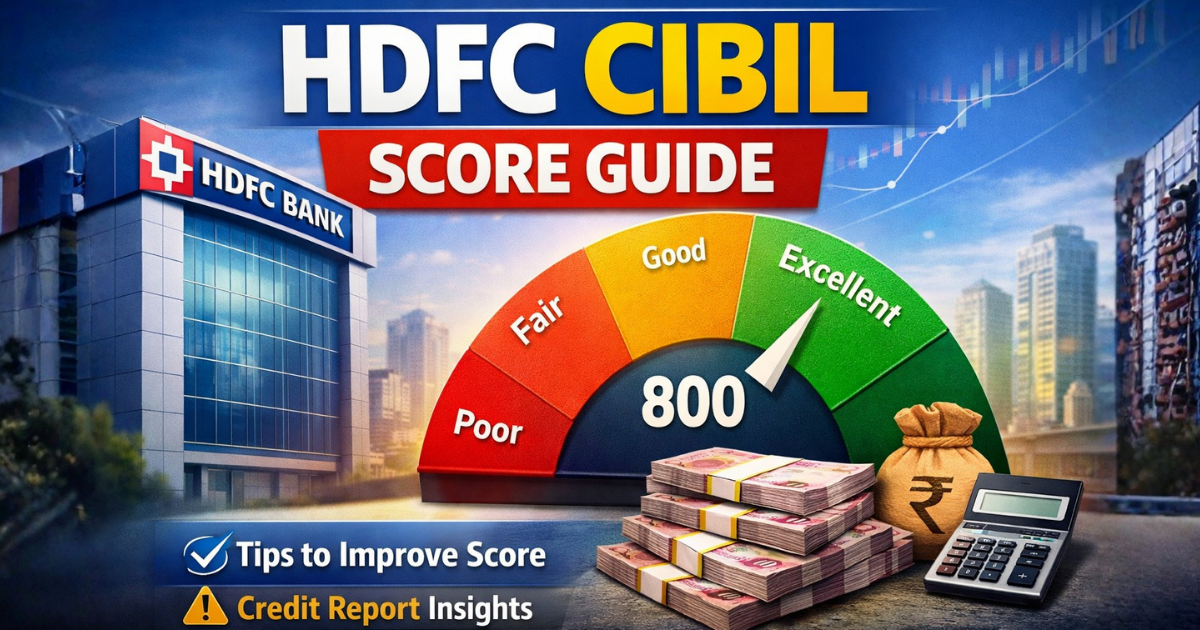

This summary article discusses the relevance of the CIBIL score regarding HDFC loans and credit cards. CIBIL score is a three-digit number (300 - 900) that shows your repayment history and trustworthy behaviours when borrowing. HDFC Bank uses CIBIL score to approve or deny the applicant's loan/credit card application, as well as set the interest rate on the loan and assess the applicant's credit availability limit. A higher CIBIL score can lead to quicker loan approvals, more attractive loan offers with lower interest rates, and higher limits to borrow against. A low CIBIL score can lead to a declined application or higher borrowing costs. The article also majors on common practises that help build a higher cibil score (missing multiple EMIs, using too much credit, applying for loans at the same time) and practical advice to help you make and sustain long-term financial wellness (pay your EMIs on time, keep your credit usage low, check and monitor your credit report, and keep a good proportion of secured and unsecured loans together).
Your CIBIL score has a major impact on whether you can obtain a loan or credit card from HDFC Bank. This article serves as the HDFC CIBIL Score Guide. CIBIL score means what it is, why it is meaningful, and how it affects your financial options. Your CIBIL score is a number ranging from 300 to 900 representing your repayment behaviour and credit history. HDFC is checking this score to assess your financial discipline. A higher CIBIL score means faster loan approvals, lower rates and a greater possibility of receiving offers that are pre-approved. A lower score means the application process will be more difficult and you will pay more. No matter if you are applying for a personal loan, home loan, or a credit card, your CIBIL score will decide how effectively your application will be processed! Understanding and working towards improving your score are the main paths to financial freedom and success in the long term with HDFC or otherwise.
While considering a loan application, a credit card, or any financial facility within HDFC Bank, one thing we check is whether you have a CIBIL score. The HDFC CIBIL Score Guide lets you know what a CIBIL Score signifies, why it is important, and how it relates to the selection of financial products and the chances of you getting those products approved.
Having a good score puts you in a better financial health state and can improve your opportunities, whereas having a poor score can limit your opportunities.
A CIBIL score is simply a three-digit number that signifies your youcreditworthinessss. A CIBIL Score is based on your credit history, repayment behaviour, and borrowing that exists at the time. The score usually varies between 300 and 900. The higher your score, the more likely you are to receive approvals from HDFC Bank for credit cards and loans faster.
HDFC Bank considers the CIBIL score as a means to assess risk when lending money. A high score indicates you are someone who is financially disciplined and who pays their loans on time. This enables them to approve applications with confidence. A low score indicates a low likelihood of loan repayment, which means potentially rejecting your application or offering a loan with a higher rate.
When you apply for a credit card with HDFC Bank, the bank will evaluate your score carefully. The likelihood is that a strong CIBIL score provides you with better credit card options, but in terms of credit limits or rewards. A weak score means your only acceptable option is rejected, or just basic options.
HDFC personal loans are directly related to your score. Personal loans are unsecured, which means there is no collateral; therefore, the bank relies on a CIBIL score to inform possession. A strong score shows you've been a responsible borrower, which will ultimately strengthen your chances of receiving a personal loan approval with a lower interest rate. A low score will discourage willingness and may result in a higher cost to invite.
A good credit score is not only important to have HDFC Bank's approval to make purchases and loans, but also plays a broader role in your financial journey. You can continue to maintain a good score and personal creditworthiness to be able to acquire credit cards and loans with the parameters you are content with. A credit score also reflects your financial stability and discipline, and having standards for future borrowing would ultimately be that much easier.
Easier approvals for HDFC Bank credit cards and loans
Better interest rates and higher credit limits
Improved chances of accessing premium financial products
Stronger financial reputation with lenders
Missing credit card or loan payments
Using too much of your credit limit
Applying for multiple loans or cards at the same time
Not having a balanced mix of secured and unsecured credit
Pay your credit card bills and loan EMIs on or before the due date. Paying on time is the most important factor in improving your score.
Do not use more than half of your credit card limit. If you use a high amount, it shows that you depend on cr, edi,t, which could hurt your score.
If you make too many applications for loans or credit cards, it will hurt your credit score because each application will create a hard inquiry on your credit report.
The best way to improve your score is to review your credit report carefully and regularly. You may find errors in your report. Even errors like a spelling error, where they have a different address, could hurt your credit score. If you report the error and want to fix it, it takes a short period of time.
Every borrower must learn the significance of the CIBIL score in the HDFC loan approval. If you take out a personal loan, home loan, or credit card, your credit score will determine the ease of the approval process. A high score creates opportunities for more favourable interest rates, quicker approvals, and pre-approved deals. Conversely, a low score may restrict financial opportunities and render borrowing expensive.
CIBIL score is a three-digit figure that represents your credit history and credit behaviour. It normally falls between 300 and 900. Just like any other bank, HDBank relies on this score to gauge your reliability as a borrower. The better the score, the more confidence the bank will have in allowing you to repay loans.
The HDFC bank verifies your credit score during the approval of any financial product because it minimises lending risks. The better the score of a customer, the more the customer is likely to repay on time, hence the bank incurs less risk. Customers scoring low are perceived as risky borrowers, and this may result in rejection or a high cost of the loan.
Easy loan approval is also one of the primary benefits of having a good score. When you have a high score, HDFC Bank handles your application, giving you a greater probability of approval for personal loans, home loans and credit cards. A low score is capable of postponing the process or even rejection.
The significance of the CIBIL score on HDFloans also covers the interest rate with which you will be charged. A higher score by the borrowers usually offers lower interest rates and lenient terms for paying money. This saves on the cost of borrowing as well as easing the monthly payments. The individuals in the lower scores can be charged with a higher rate thereby increasing the burden.
Your CIBIL score is also used by HDFBank to determine your eligibility for a credit card. A good score provides you with higher benefits and credit limits. Moreover, the customers who have outstanding scores tend to get pre-approved loan and credit card offers that facilitate the process of borrowing in a faster and easier manner.
Fasprocessingss of HDFC loans and credit cards.
Flexible repayment and competitive interest rates.
Availability of more loan amounts and credit card limits.
Pre-approved offers and instant processing.
Late or missing loan or credit card payments.
Exceed the amount of the credit limit.
Application of various loans or cards simultaneously.
Disregarding errors or old information in the credit report.
Credit card dues and EMIs will boost your score because timely payment of EMIs and credit card dues establishes a good repayment history, the most significant factor when it comes to raising your score.
Do not spend all your credit card limit. Having low usage indicates to HDFC Bank that you use credit in a responsible manner.
Excessive applications leave bad impressions and numerous hard questio,ns and this can reduce your score. Apply only when necessary.
Revise your report to eliminate errors. Incorrect information, when not corrected, can lower your score, as well as affect your ability to make loan applications.
The question that many customers usually ask themselves is how to increase their CIBIL score in HDFC loans and cards. Because HDFC Bank uses your credit score as a major determinant for approval to financial products, you are better to ensure you have a healthy credit score, as it is the only way you can get financial products when you need them, in the shortest time possible, with reduced interest rates and premium facilities. A high score not only enhances your eligibility status but also assists you in developing financial stability in the long run.
HDFC Bank will chthe eck CIBIL score to determine repaymbehaviourvior and discipline in borrowing. When the score is high, the bank is assured that you will make payments on loans and credit card bills on time. This may lead to an increase in credit limits, lower rates on loans and offers. A low score, however, decreases eligibility and raises the cost of borrowing.
To increase your score, you need to be consistent and financial. The correct steps will enable you to build your profile slowly and will provide you with improved opportunities with HDFC loans and credit cards.
The most significant aspect of a healthy score is that of timely repayment. A single default on payment is enough to be reflected negatively in your profile. Never miss repaying loan EMIs and credit card payments on time to demonstrate financial responsibility.
When you make multiple loan or credit applications within a limited time span, your score is lowered because of the hard inquiries. This is credit hunger as seen by HDFC. You can use it to increase your score by only making the application when you need it, waiting before making another request.
Excess utilisation of your available credit limit is an indication of financial reliance on borrowed funds. One of the safe things to do is to ensure that you are using less than 30 per cent of the overall limit. This not only increases your score, but also increases your possibilities of higher limits in future.
There should be a balance in your credit profile between secured borrowings, such as home loans, loans and unsecured borrowings, such as personal loans or credit cards. A good mix demonstrates that you can responsibly manage various kinds of borrowings, which enhances your rating with HDFC.
Verify your report with HDFC NetBanking or official sources to make sure that they are not erroneous. Errors in the report will result in a low score, and it is important to correct them within a short period of time.
Excessive use of unsecured loans like credit cards and personal loans can cause a perception of risk. Making them stable with secured loans is more stable.
Never close old credit card accounts unless there is a need to do so. Credit history is reflected in old accounts and units, and this assists in the development of a good score over time.
In case EMIs are heavy, a longer repayment tenure would give them time to make payments. Consistency is a greater factor in getting a better score, lending loans fast.
Having a healthy CIBIL score is very important for HDFC Bank customers who want seamless access to credit cards, personal loans and home loans. The higher the score, the quicker the approval process will run and the better interest rates, limits and offers you will receive. A low score can limit future financial opportunities and add significant risk to your borrowing costs. To maintain a good CIBIL score, pay your EMIs and credit card dues on time and predictably, keep your utilisation ratio below 30 per cent, avoid too many different credit application requests on your report, review your CIBIL report for inaccurate information regularly, and develop a sound mix of secured and unsecured loan options. Your CIBIL score indicates your financial discipline; therefore, by managing your CIBIL score to this criterion, you can effectively manage your credit in a disciplined manner, which will give you subsequent control and stability of your finances, and subsequently, your long-term financial health with HDFC Bank.
Q1. What is a CIBIL score in HDFC?
This is a three-digit figure (300–900) that tells you how good your credit is and how well you've paid back loans in the past.
Q2. Why does HDFC Bank check my CIBIL score?
To show how risky something is and whether or not to approve a loan or credit card, set interest rates, and set credit limits.
Q3. What score is good for HDFC loans and credit cards?
A score of 750 or higher is considered good in order to get quicker approvals and better deals.
Q4. How can I improve my CIBIL score with HDFC?
Paying bills and EMIs on time, not using too much credit, not applying for too many things all at once, and checking your report regularly.
Previous Post
Next Post

Founded in 2015, Ahk Tips is a New Delhi-based financial advisor specializing in debt relief and loan management solutions.