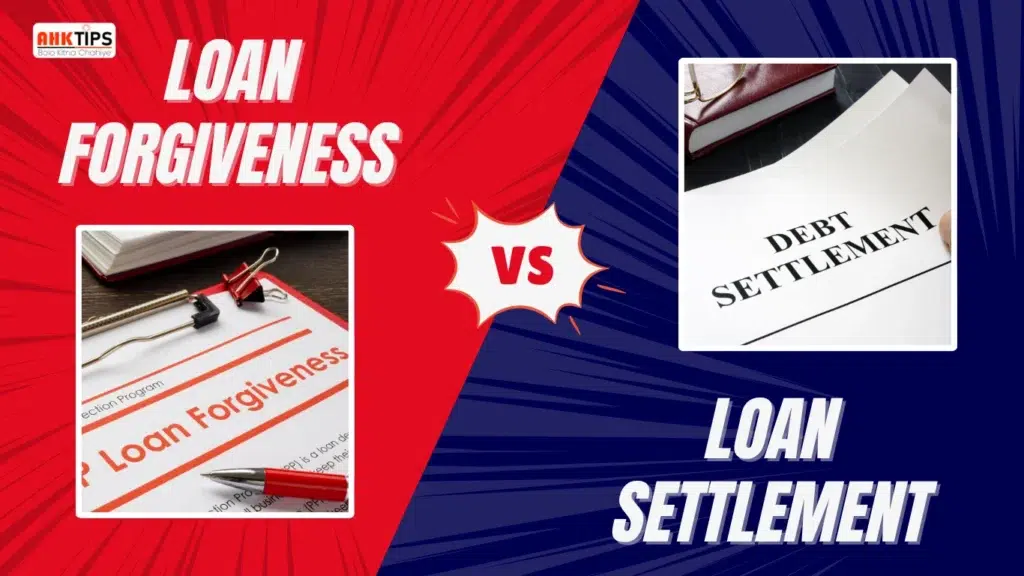

Two strategies to handle overdue loans are loan settlement and forgiveness. Loan forgiveness is when the government or bank cancels part or all of your loan without requesting repayment. Usually, it relates in particular to natural calamities, borrower death, disability, or another government program. Amount settlement is the process by which a borrower is unable to pay back the entire amount owing due to financial difficulty. The bank takes less to close the loan. While settlement damages your credit report and lowers your future loan prospects, forgiveness does not lower your credit score. While settlement calls for negotiations with the bank, forgiveness is policy-based and limited to particular people. If at all possible, forgive since it protects your credit record. Settlement should only be taken into account once there is no other way to pay back the debt.
Many people search for strategies to lighten their load when struggling to pay back a debt. Loan settlement and forgiveness are two often available choices. Although they sound alike, their working methods and impact on your financial destiny are somewhat different. Often, through special programs, loan forgiveness is the government or bank cancelling either part or all of your loan. Conversely, loan settlement is an agreement you negotiate with the bank whereby you pay a smaller amount to complete the loan. One should know the differences between the two, since one might preserve your credit score while the other can harm it. This essay will teach you the main variations, when each alternative fits, and which one would be preferable for your circumstances.
Many debtors believe loan forgiveness and loan settlement mean the same thing, even if their names are different. There are two somewhat distinct approaches to dealing with overdue loans. Knowing what loan forgiveness is not like settlement can help you prevent credit damage and pick the appropriate payback schedule.
Loan forgiveness is the process whereby a lender or the government cancels some or all of your loan without expecting repayment. Usually, it is offered within particular guidelines and under particular projects.
Most often observed is loan forgiveness in:
Though unusual, a government offer of forgiveness for student loans is possible in India under very limited conditions. A borrower cannot directly negotiate this with a bank.
Usually, loan forgiveness is not recorded negatively on credit bureaus. Given that it is regarded as an official waiver, it does not affect your credit score. Depending on the policy involved, forgiven amounts can occasionally be handled as taxable income, though.
Loan settlement occurs when a borrower fails to pay back the whole loan. Following a partial payment, the bank agrees to shut the loan account. The debt is tagged as resolved, and the unpaid balance is wiped off.
Settlement is usually offered:
Often, the only choice left after all other recovery strategies fail is loan settlement.
Settlement changes your credit record, unlike forgiveness. The loan will show on your credit report as “settled” rather than “closed,” therefore reducing your credit score. This makes loan, credit card, or even future employment prospects more difficult.
Should you be eligible for loan forgiveness, it is always the superior choice since it maintains your credit profile. The amount of settlement should only be taken into account should all other repayment choices fail and there is no means to pay the entire amount.
If you find yourself having trouble paying back your debt, you should know about eligibility for loan forgiveness and settlement. Although they both provide relief, their effects on your financial record, processes, and goals differ. Knowing whether one applies to your circumstances will help you avoid long-term credit ruin.
Loan forgiveness is the decision taken by a government or bank to cancel some or all of your current loan. You are free of the obligation to pay back the forgiven sum. Limited to particular borrower groups, this alternative is generally accessible through government-backed schemes.
In India, loan forgiveness typically underlines the following:
Negotiating this is not what we do. Eligibility is based on the government or financial institution’s stated criteria under specific conditions.
Borrowers have to keep current on bank alerts and government notifications. Should a waiver program be instituted, you could be asked to provide:
Approval depends on satisfying every policy requirement.
Loan settlement involves negotiating with the bank to pay less than the whole outstanding balance. The bank shuts your loan account following a partial lump sum payment. Usually, this follows from the loan turning non-performance-wise.
Banks might think about settlement should:
Usually, this choice comes after more conventional recuperation strategies fail.
You could be required to provide:
It should agree, the bank provides a written settlement letter including the lowered sum and terms.
Knowing your eligibility for loan forgiveness and settlement will help you decide which course of action best fits your circumstances.
Many debtors who have trouble paying back loans think about either loan forgiveness or loan settlement as a means of lightening their financial load. Although they both lower the amount you pay back, their impact on your credit score is somewhat different. Knowing how credit score affects loan forgiveness against settlement will enable you to decide with knowledge for your financial future.
Debt forgiveness is the government or lender cancelling part or all of your debt balance. Usually part of a formal program or government policy meant to offer relief under particular circumstances, this cancellation is under loan forgiveness; the borrower is free from obligation regarding the forgiven amount.
Usually, loan forgiveness either has no negative effect on your credit score or very little effect. The lender or government programs waive the forgiven amount, hence your credit report usually shows the debt as “closed” or “paid in full.” Credit bureaus do not decrease your credit score as this status indicates neither a default nor a delay.
Since you are formally debt-free without missed payments or defaults, loan forgiveness can sometimes help to keep a good credit record.
A loan settlement is a negotiated agreement whereby the borrower pays a smaller lump payment to clear the loan account between her and the lender. The lender writes off the leftover debt.
Your credit score usually suffers greatly after loan settlement. Usually, your credit record will display the loan status as “settled” or “partially paid” when you pay back a loan for less than the whole amount. This suggests that you did not pay back the entire loan balance as first agreed upon.
Loan settlements are seen by credit bureaus as a sort of default. This reduces your credit score and stays on your credit report for several years, therefore making it more difficult to get new credit, loans, or low interest rates down the road.
Should you be eligible for loan forgiveness, this is the better choice since it maintains your credit score. It lets you quickly recover your financial reputation by providing relief free of unfavourable marks.
When a full refund or forgiveness is not feasible, settlement should be seen as a final resort. It lowers your debt load but changes your creditworthiness and future borrowing capacity.
Understanding the effect of credit score on loan forgiveness versus settlement will help you better budget and prevent long-term financial loss.
Those who find it difficult to pay back their loans sometimes search for ways to either clear or minimise their debt. Two often available choices are bank-offered loan settlement and government-backed loan forgiveness. Though they provide alleviation, they come from diverse sources and operate differently. Knowing the distinctions between government loan forgiveness and bank loan settlement will help you decide on the best course of action for your circumstances.
Loan forgiveness is the government’s or policy-based cancellation of a loan. Under this situation, the borrower is free from the need to pay back all or a portion of the loan amount. Usually, this is provided under special plans meant to assist particular groups of people in society.
Usually, government-sponsored forgiveness comes from the following sources:
These are not personal plans but rather large schemes whereby government-defined fixed criteria determine eligibility.
Either the loan is completely waived or only partially cancelled. The scheme may guide the restructuring or clearance of the remaining sum. Many times categorised as “closed” or “paid through waiver,” forgiven loans do not affect your credit score.
The settlement of a loan is a private agreement between the borrower and the bank. It arises when financial difficulty prevents the borrower from paying back the entire loan amount due. Closing the loan under “settled,” the bank agrees to accept a lump sum payment less than the outstanding balance.
Banks may provide settlement upon:
The borrower has to make a request and present records attesting to hardship. Should approval be granted, the bank sends a settlement letter attesting to the terms. The borrower’s credit score for several years is affected, nonetheless, by the account’s reported “settled” credit bureau marks.
Knowing the actual difference between government debt forgiveness and bank loan settlement will help you choose whether to deal straight with the bank or seek policy-based relief. Your financial situation, credit aspirations, and choices of available solutions will determine the appropriate one.
Many times, loan borrowers who find it difficult to pay back ask if they should seek loan forgiveness or a settlement. Understanding the benefits and downsides of debt forgiveness against settlement helps one choose which path of action best fits future credit situation, as well as cash relief.
Loan forgiveness, under a specific plan, is the government’s cancellation of either part or all of your loan. There is no need to reimburse the waived portion.
Loan settlements are agreements reached with the bank to pay a lesser amount and close the debt. Usually, it comes from complete payback not being practical.
The main fluctuation is in the credit impact. While forgiveness keeps your credit in good shape, a settlement weakens it. Your eligibility for programs and the urgency of your matter will decide which of them fit you most.
Understanding the benefits and negative effects of debt forgiveness versus settlement helps you to choose a plan that supports both momentary relief and long-term stability.
When you are trying to pay back a debt, knowing the differences between loan forgiveness and loan settlement is quite crucial. Usually, under specified programs, the government offers loan forgiveness; it does not compromise your credit score. Conversely, loan settlement is a private deal with the bank that will help you pay off debt, but will cause a “settled” notation on your credit report, therefore lowering your credit score. If you qualify, forgiveness is the best option since it provides relief from long-term financial damage. Settlement should only be regarded as a last resort in cases when no other option is feasible. Always review your eligibility, compile appropriate documentation, and consider how each choice will over time impact your credit. Choosing the proper course will enable you to restore your financial situation.
Que: What is loan forgiveness?
Usually, with no credit score damage, it is when the government cancels your loan.
Que: What is loan settlement?
Though it reduces your credit score, it’s a contract with the bank whereby you pay less than what you owe.
Que: Does settlement hurt your credit?
It does indeed designate your report as “settled” and lower your credit score.
Que: Who gets loan forgiveness in India?
Under specialised plans, farmers, low-income students, or families dealing with death or disability.
Previous Post

Founded in 2015, Ahk Tips is a New Delhi-based financial advisor specializing in debt relief and loan management solutions.