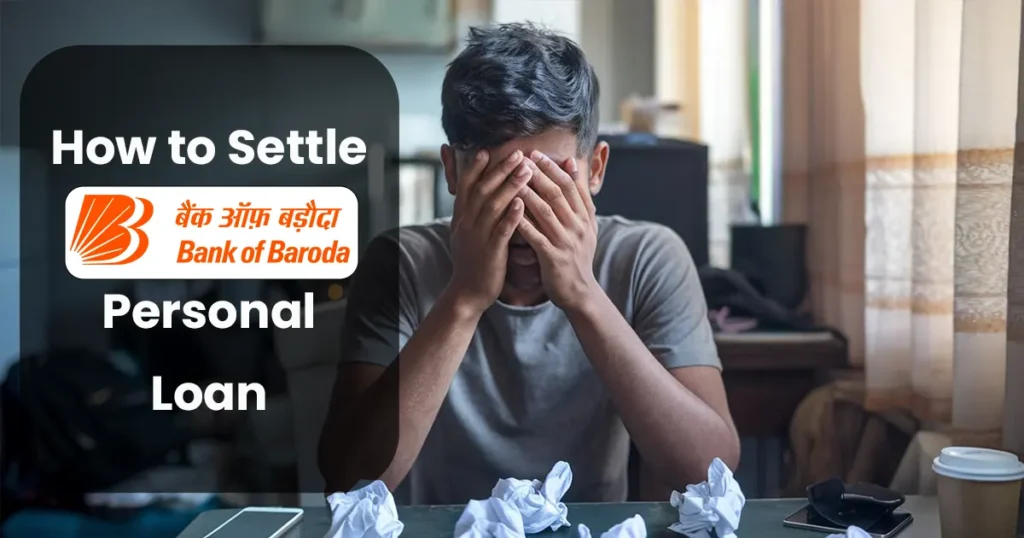

At times, personal loans can be difficult to manage, particularly when life circumstances change unexpectedly. If you have taken a personal loan from Bank of Baroda and are struggling to make regular payments, loan settlement may offer a way to manage the situation. Loan settlement is an agreement between the borrower and the bank where a portion of the outstanding loan is paid to close the loan, while the remaining amount is written off by the bank. However, this process has serious implications for your credit score and future borrowing ability. In this guide, we’ll walk you through the steps for Settle Bank of Baroda Personal loan, explain its impact on your financial future, and explore alternative options.
A personal loan settlement is an agreement in which a borrower pays a certain percentage of the outstanding loan amount to the bank, which then writes off the remaining balance. It is an option for borrowers who are financially unable to repay the full loan. Once settled, the loan is marked as “settled” rather than “paid in full,” and this remains on the borrower’s credit report, affecting future financial opportunities.
Loan settlement should be considered only as a last resort due to its adverse effect on your CIBIL score and credit report. Here are a few scenarios when loan settlement may be an option:
Setting up a Bank of Baroda personal loan involves clear communication with the bank and proper financial planning. Here’s how to go about it:
Before initiating the settlement process, take a close look at your finances. Calculate the total outstanding loan amount, evaluate your assets, and determine how much you can offer the bank as a one-time payment for the settlement. Knowing this will help you during negotiations.
Visit your nearest Bank of Baroda branch or contact the bank’s loan recovery department. Explain your financial situation and request a settlement option. You may also send a written application to the bank, expressing your inability to continue loan payments and requesting a meeting to discuss settlement options.
Bank of Baroda will likely require documentation to verify your financial distress. You might need to submit:
These documents will be reviewed by the bank before any settlement proposal is offered.
Once the bank has reviewed your case, they will offer a settlement amount, usually a percentage of the total outstanding loan. The settlement amount can range between 50% and 80% of the outstanding loan, depending on your financial situation and how long the loan has been overdue. Be prepared to negotiate. The goal is to agree on an amount that you can afford while also convincing the bank that this is the best option for recovering part of the loan.
After agreeing on the settlement amount, you will need to make a lump sum payment. Once the payment is made, request a No Dues Certificate (NDC) from the bank, which confirms that your loan has been settled and you have no further obligations. Keep this certificate safe for future reference.
Bank of Baroda typically considers loan settlement in cases where the loan has become a non-performing asset (NPA), which means the borrower has not made repayments for over 90 days. The decision to settle a loan is made after reviewing the borrower’s financial condition, the amount of the loan already repaid, and the likelihood of further recovery. Some key points of the settlement policy include:
Loan settlement with Bank of Baroda will have a negative impact on your credit score and credit report. Here’s how:
Before opting for loan settlement, consider the following alternatives to manage your Bank of Baroda personal loan:
If you’re facing temporary financial difficulties, you can request loan restructuring. Bank of Baroda may allow you to extend the tenure of the loan or reduce the monthly EMI amount, making repayments more affordable.
You can ask Bank of Baroda for a loan moratorium, which temporarily suspends EMI payments during times of financial crisis. This gives you breathing room to stabilize your finances before resuming payments.
If you have multiple loans, consider consolidating them into one loan. This way, you may be able to secure a loan with a lower interest rate, which can make repayments more manageable.
Instead of settling the loan, try borrowing from family or friends to clear the outstanding amount. This can help preserve your credit score and avoid the negative impact of a settlement.
While settling a personal loan with Bank of Baroda can provide immediate relief, it’s essential to understand the long-term consequences. A settled loan can significantly affect your credit score, making it harder to access future loans or credit. Before opting for settlement, explore alternatives like loan restructuring, moratoriums, or debt consolidation. If settlement is the only option, negotiate the best possible terms and ensure that you get a No Dues Certificate from the bank to avoid any future liabilities.
Que: Can I settle a Bank of Baroda personal loan if I have missed just a few payments?
Ans: Typically, settlement is considered only when the loan is classified as an NPA, which happens after 90 days of missed payments.
Que: How much of the loan amount can Bank of Baroda agree to settle for?
Ans: The settlement amount can range from 50% to 80% of the outstanding loan, depending on the borrower’s financial condition and the bank’s assessment.
Que: How does loan settlement affect my CIBIL score?
Ans: Settling a loan will lead to a significant drop in your CIBIL score, as the loan is not marked as “paid in full” but rather “settled.”
Que: Can I get future loans after settling a loan with Bank of Baroda?
Ans: While it is possible to get future loans, it may be more difficult due to the negative impact on your credit score. You may also face higher interest rates.
Que: What documents do I need to provide for loan settlement with Bank of Baroda?
Ans: Common documents include income statements, bank statements, medical bills, and proof of unemployment, depending on your financial situation.
Previous Post

Founded in 2015, Ahk Tips is a New Delhi-based financial advisor specializing in debt relief and loan management solutions.