
By and large, loan settlement and EMI (Equated Monthly Installment) are both financial means to deal with debt, though in different situations. EMI is a systematic way of repayment of a loan in pre-established monthly installments over a period, along with interest as well as principal. It is a fix installment payment schedule made available to the borrowers, thereby easier to arrange and budget for finances. EMI is appropriate for those who can safely repay the loan amount in installments without any economic burden. Periodic EMI payment can also be useful to improve the credit rating of a borrower, provided timely manner.
Settlement of the loans, on the other hand, is apt for individuals who are economically under pressure and cannot pay the EMI from time to time. It involves negotiating with the lender to repay less money than is owed, typically a single lump sum. While loan settlement can provide rapid relief in the sense that it eliminates the outstanding amount of debt, it ruins the borrower’s credit report and has associated legal repercussions. It is consider a last option for those who are not able to repay the debt through regular means of payment.
Choosing between EMI and the settlement of a loan depends on the financial position of the borrower. If you can repay the loan in an installment manner, then EMI is a suitable option as it provides a sequential method of repayment of the debt without damaging your credit score. But if you cannot afford to repay the loan every month and are facing financial difficulties, loan settlement may be a faster method of settling the debt. In either case, it is necessary to examine your financial situation thoroughly and seek the advice of experts when necessary to make a well-informed decision.
When handling finances, two terms that one generally comes across are EMI (Equated Monthly Installment) and loan settlement. Both processes are utilize by people to settle loans, but they work very differently. EMI is an installment payment scheme where lenders repay their loans in the form of small monthly payments, both the interest and the principal, over a specific period.
On the other hand, loan settlement is a situation where both borrower and lender agree to settle the outstanding amount of the due loan for less than what is owed, generally after the borrower faces financial difficulties. The choice between EMI and loan settlement depends on a variety of considerations, like the borrower’s financial health, the amount of debt, and the borrower’s long-term goals.
EMI is a plan method of repayment of loans through installments, so the borrower can easily maintain control over money without getting crush by an enormous amount at the initial stage. Paying off a loan, however, is a quicker method to get rid of debt in case one is under a severe financial crisis. Yet it could be couple with negotiations and will affect the credit score of the borrower.
In this article, we are going to explain both loan settlement and EMI in depth, contrasting their benefits and drawbacks, so you will have a better idea which one might be more suitable for your financial condition. If you are looking at taking a loan, having trouble paying one back, or just wish to know what are your options, this tutorial will give you informative information to make a more informed decision.
EMI, or Equated Monthly Installment, is a predetermined amount of money that the borrower pays each month to settle a loan. It includes two components: the principal (the initial amount of money borrowed) and the interest (the additional cost incurred by the lender for lending the money). The EMI is the same in each month so that it becomes convenient for the borrower to manage his or her finances.
For instance, if you borrow money to purchase a house or a car, you will repay the money borrowed in the form of regular installments over some duration, like 1 year, 5 years, etc. You will make monthly payments of a fix amount until the repayment of loan is fully repay. By making this payment, you need not make large amounts together, and the payments can be arrange to suit you. The EMI also depends on the size of the loan, the rate of interest, and the loan duration (the duration within which you will repay the loan).
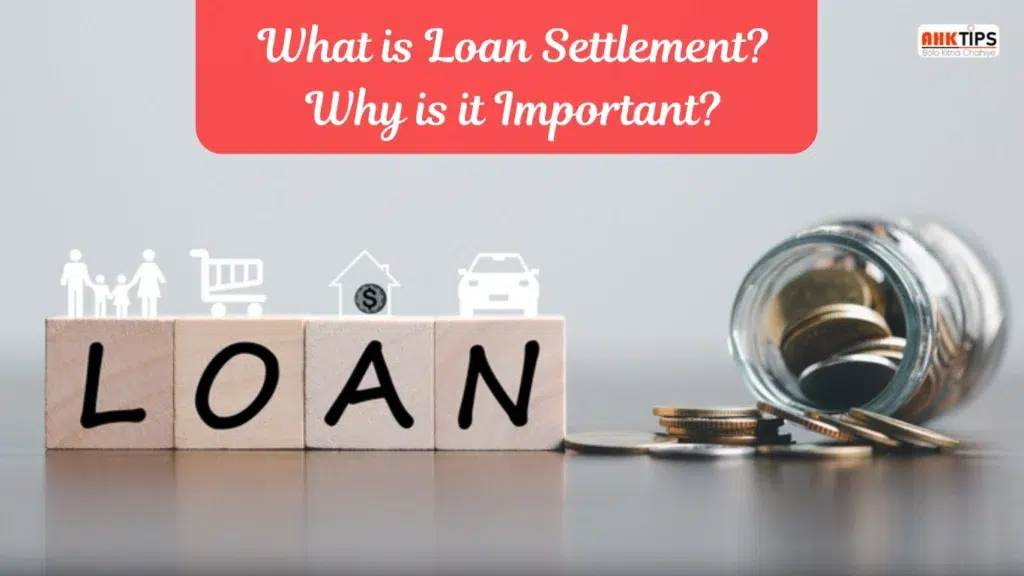
Loan Settlement is a process in which you negotiate with your creditor to forgive a part of the outstanding amount on your Loan by making a lump sum payment. It is an agreement that you make with your card issuer as a last resort when you see that your Loan debt is increasing.
This can happen due to many reasons, ranging from unnecessary spending to careless spending habits. When your debt increases, the interest on it also increases, which can make it difficult for you to repay the outstanding amount. If you do not see any way out of this, then you can recommend a Loan Settlement.
Let us know what documents are require for a Loan Settlement.
1. ID Proof
2. Address Proof
3. Income Proof (if required)
4. Loan Statement
You will have to provide the Loan statement to give the correct information about your outstanding balance. The bank can also generate this statement itself, but sometimes they ask you for a copy of it.
5. Settlement Request Letter
If you are approaching the bank for settlement on your own, you will have to give a written Settlement Request Letter in which you can explain:
6. Settlement Offer Letter given by the bank
When the bank agrees to the settlement, they give you a Settlement Offer Letter. Read it carefully and confirm the amount and terms mentioned in it.
Below are some steps that should be followed before a Loan Settlement:
Below are some common reasons:
Choosing between EMI (Equated Monthly Installment) and loan settlement is primarily based on your financial situation, goals, and issues you are experiencing with your loan.
EMI is primarily a suitable option if you can afford to pay monthly. It offers a systematic, periodic approach to repayment of the loan amount over a fixed period, such as 12 months, 24 months, etc. The amount and frequency that you pay monthly will be fixed, and this helps you to plan your finances accordingly. Besides, regular and timely payment of EMI enhances and/or maintains your credit score, which is crucial for future requirements.
Advantages of EMI:
Simple budgeting with predictable monthly payments.
It enhances your credit score if paid on time.
Helps you keep your financial responsibilities intact without too much fluctuation.
Disadvantages of EMI:
Requires regular income for payment.
Is slow in repaying huge loans when the repayment period is long.
Loan settlement is an option of choice if you are struggling to pay and are likely to default on your loan. Here, you settle the debt prematurely by paying a part of the loan, normally less, to your financier. It may bring relief in the short run if you are burdened by finances, but there are serious drawbacks.
Advantages of Loan Settlement:
Helps you pay off the loan earlier by paying a lesser amount.
It can turn out to be your savior if you are no longer in a position to make EMI payments.
Disadvantages of Loan Settlement:
Harms your credit history.
May involve negotiations, which are not always fruitful.
Could have legal consequences depending on the lender’s policies.
If you are in a stable financial situation and have the means to pay periodically, EMI will generally be the best option because it helps you repay the loan amount completely over a period without harming your credit. But if you are financially troubled severely and cannot afford your EMI any longer, settling the loan may provide a quicker but more hazardous exit route.
Finally, the correct option is your payment processing ability and the severity of your financial status. It is always best to consult a finance counselor or your lender to determine the best solution for your case.
If you are unable to pay your Loan dues and are troubled by heavy interest rates, a Loan Settlement can be a possible solution. Under this process, the bank or Loan company can waive off part of your total outstanding amount and give you the option to make a lump sum payment (One-time Settlement). However, this can affect your CIBIL score, so adopt it only as a last option.
Step-by-step process to apply for Loan Settlement
A settlement can hurt your credit score. The impact can be seen in the following ways:
Let us know what the benefits of doing a Loan Settlement are:
Let us know in detail what the disadvantages of doing a Loan Settlement are.
Last but not least, both EMI and loan settlement are crucial monetary decisions that serve various purposes based on the borrower’s situation. EMI is a great choice for borrowers who prefer to have a stable and systematic way of repaying their loans. It gives borrowers the freedom to pay small, manageable amounts of money every month, and it becomes easy for them to plan their finances.
This choice is ideal for those who have a consistent income and the ability to make regular payments in the long term. EMI helps to build a credit history as long as payments are made on time, and it can be a safe way of paying back loans without becoming financially strained.
Settlement of the loan, however, can be a choice for those with serious financial issues. If you cannot pay back the entire loan, loan settlement is where you agree with the lender to pay less to clear the debt. While this may be a savior in tough times, be aware that loan settlement can reduce your credit score and might not be for everyone. Furthermore, repayment of the loan can involve protracted negotiations, and the borrower must be prepared for possible legal and financial consequences.
Finally, whether EMI or loan settlement is better depends on your finances. If you can afford to keep paying installments and pay back the debt period-wise, then EMI would be a viable option. Otherwise, if repayment of the money is proving to be a hindrance to you and repaying the amount completely is not in your question now, loan settlement could provide relief in debt eradication.
Que: How do I calculate EMI?
Ans: Your EMI can be calculated online using an EMI calculator or simply by using the following formula:
EMI = [P x R x (1+R)^N] / [(1+R)^N – 1],
where P = the loan amount,
R = monthly rate of interest, and
N = the number of months.
Que: What is loan settlement?
Ans: Loan settlement is a transaction between a borrower and a lender in which a borrower pays off less than the outstanding amount of a loan, usually because there is insufficient cash. The lender consents to take a lower amount to pay off the loan, thus facilitating the repayment of the debt before the time.
Que: Is loan settlement better than EMI?
Ans: It varies depending on the income of the borrower. EMI would be better if the borrower could repay in instalments every month in the long term. Loan settlement would be better if the borrower is not capable of repaying the loan and is unable to repay in terms of instalments regularly.
Que: Can loan settlement have an impact on my credit score?
Ans: Yes, loan settlement harms your credit rating. To settle a loan for less than what you owe means that the borrower could not repay the debt, and this is considered to be a reflection of poor money-handling skills. But defaulting on a loan or bankruptcy is worse.
Que: How do I obtain a loan settlement?
Ans: To settle the loan, you must call your lender and tell them about your financial status. If your lender agrees, you may negotiate a lower amount to settle. The lender will normally consider your payment capacity and then propose a settlement figure.
Previous Post

Founded in 2015, Ahk Tips is a New Delhi-based financial advisor specializing in debt relief and loan management solutions.