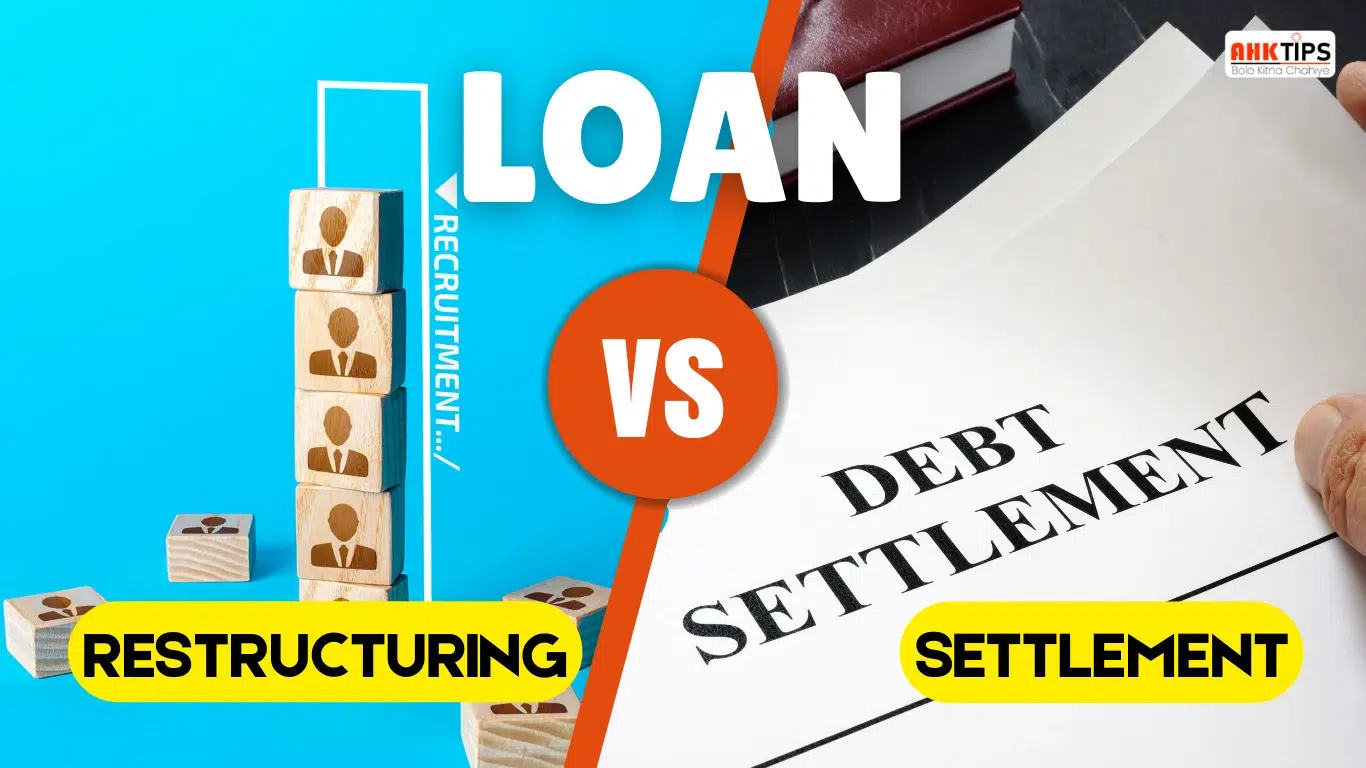

Two approaches through which banks help consumers in trouble with finance are loan restructuring and loan settlement. Loan restructuring is altering loan conditions—that is, lengthening repayment, lowering rates of interest, or merely suspending payments temporarily. It affects credit to some extent, but it helps borrowers stay in line. For individuals experiencing temporary troubles, it’s an ideal option. Often, the consequence of acute monetary distress, loan settlement is the situation in which a borrower pays less than the entire loan amount. It is only a last-ditch effort and results in a significant decrease in credit scores, thus making borrowing in the future difficult. Restructuring is for the people wanting to keep paying; settlement is for the ones not in a position to return the entire loan amount. Both have long-term consequences for credit.
Two possible solutions banks have to support borrowers experiencing difficulty repaying loans are loan restructuring and loan settlement. They work in different manners and impact credit standing in different ways but both allow individuals to take charge of the debt. Loan restructuring redefines loan conditions to simplify payments; loan settlement allows the borrower to pay less to retire the debt. Each has its strengths and weaknesses; therefore, understanding when and how to utilise each will prove extremely valuable to maintaining creditworthiness and fiscal health.
Loan restructuring refers to how banks or other financial institutions change the initial loan terms to allow debtors to pay back more easily.
Typically, this occurs as a result of a borrower experiencing financial difficulties and being unable to adhere to the initial loan plan.
Loan restructuring is intended to prevent outright default of the loan. The bank offers more accommodating terms than compelling the borrower to repay immediately in full. It favours both the borrower and the lender. The borrower escapes penalties or litigation; the bank improves its prospects of getting the money returned.
The bank can give loan repayment more time. This decreases the monthly instalment value, making regular borrower payments easier.
At times the bank agree to a lower loan interest rate. This benefits the borrower by decreasing the overall borrowing cost.
A moratorium is a period during whereby the borrower is off paying for a few months. This reprieve gives time to recover from financial pressure before starting or resuming regular payments.
Unpaid interest now and then is added to the loan amount and spread across the next term of payments. This simplifies future payments and eradicates past due.
Borrowers who are facing genuine financial hardship due to loss of employment, sickness events, slowdown in business, or some other valid reason may apply for loan restructuring. However, acceptance is not guaranteed. The bank will consider the borrower’s income, credit history, and future ability to repay before approving new terms.
Restructuring has some long-term effects, even though it makes repayment easier. It would be reflected on your credit report that the loan was altered. It could slightly lower your credit score or affect your decision on future borrowing.
Borrowers who are short-term financially would welcome loan restructuring as an alternative. It assists individuals to get back on track without turning away from their obligations. Borrowers should honestly and in advance explore restructuring options with their bank before actually missing payments.
A loan settlement is the process in which the borrower collaborates with the bank to settle less than the total outstanding loan balance. Most of the time, this option is considered when the borrower’s severe financial difficulties make it impossible to repay the loan in full.
Banks can settle the loan in a lesser lump sum if a borrower cannot make regular payments and has no way to repay the entire amount. This is considered a last attempt to repay at least a portion of the loan rather than writing it off completely.
The bank then examines the borrower’s overall ability to pay, income, and outgoings. If it finds that repayment is indeed impossible, the bank may make or accept a one-off settlement offer.
When the borrower and the bank agree on a lower amount, it must be paid in full, typically in a single payment. Although not in the same way as an entirely paid debt, the loan is recorded as paid and settled after payment.
Full payment closes a loan; loan settlement is not the same. The borrower does not complete the entire contractual amount in settlement because the bank chooses to accept a lesser amount.
Negotiating a loan does damage the borrower’s credit history. Instead of “closed,” or “paid in full,” the credit agency marks the account as “settled.” This sends a message to subsequent creditors that the borrower did not repay the entire loan.
This stamp can lower the credit score and remain on the credit report for many years. It will also make it difficult to have credit cards or new loans in the future.
Loan settlement should be viewed as a last option. If all else— restructuring, refinancing, or deferral of payments—fails, settlement may be an option. It is notably utilised after extended sickness, dismissal from work, or business closure.
Two different modes through which banks offer help to debtors under financial duress are loan restructuring and settlement of loans. Although they strive for relief, they differ significantly in operations as well as repercussions in the long run.
Restructuring is when a bank reorganizes the terms of an existing loan in such a way that the lender can more readily repay. This can involve reducing the rate, extending the length of time of the loan, or issuing a temporary delay of payments.
The borrower applies for restructuring and provides evidence of financial distress. If approved, the bank modifies the terms of the loan but demands full repayment in the long run.
The borrower continues to pay according to the new terms; the loan is still active. It has good relations with the bank and prevents default.
Though not considered a loan default, loan restructuring will lower the credit score to some extent. For those who would want to protect their credit history, it is the best option.
When a borrower enters into agreement to settle with a lower lump-sum payment rather than back-off from the complete loan, loan settlement occurs. The bank agrees to settle the loan with a partial payment.
Presenting their situation, the borrower negotiates a settlement amount. If approved, the bank closes the account and records the loan as “settled.”
Even though the borrower is no longer responsible for the unpaid debt, the bank does not consider the loan as paid in full. It is treated on the lender’s end as a loss.
Loan settlement badly reduces the credit score. The “settled” status remains on the credit record for years and can make future borrowing more difficult.
Loan restructuring requires full payment under modified terms. Loan settlement allows you to close the account with partial payment.
Restructuring might be thought of as cooperation. One step towards recovery from loss is settlement.
Restructuring indicates a responsible effort towards repayment.
Settlement indicates financial failure, unable to meet the loan conditions.
In terms of debt repayment issues, loan settlement and restructuring both offer potential assistance. Having an understanding of their pros and cons will allow you to make the right decision based on your long-term goals and financial resources.
Loan restructuring alters the terms of the loan, such as reducing the monthly payment or extending the repayment period. This allows one to manage payments without missing deadlines.
The credit report reflects an altered instead of a defaulted or settled account since the loan is not closing at a loss. This keeps over time more even your credit score.
Restructuring demonstrates desire to pay back. Lenders are more willing to help clients who stay committed to pay back-off and demonstrate cooperation.
Lengthening the term may cause you to pay more interest in the long run. This increases the loan’s total cost despite lower monthly payments.
Not all petitions for restructuring are granted. The bank will review your income and repayment capacity before making a decision.
Restructuring may not be enough to address your excessively stressed financial situation.
When it is not possible to repay in full, settlement offers quick relief through the ability to settle the debt by paying part of the whole.
For individuals who have no income or major financial reversals, such as business loss or medical crisis, it may be their ultimate option.
The loan account closes once settled, and you are free from responsibility for future instalments.
On your credit report, the word “settled” is used, lowering your credit score and lingering for a few years.
You may be viewed as a risky borrower by lenders, making it harder to obtain loans or credit.
It may jeopardise your future negotiating leverage with the same or other lenders.
Financial stress can make loan repayment keeping difficult. Two options that can bring relief in such a situation are loan restructuring and loan settlement. Selecting each option at the right time can help protect your credit score and financial health.
Analyse your ability to pay back, savings, expenses, and income before deciding whether to settle or restructure.
The right decision will depend on whether your situation is temporary or permanent.
If your financial issues are short-term, loan restructuring is a good option. This may require a medical crisis, loss of employment, or a business downturn. Restructuring allows you to stay on track without defaulting if you expect your income to bounce back.
Restructuring is the ideal option if you want to repay the entire debt but need more time or smaller instalments. The bank may grant a temporary stop in payment, extend the tenure of the loan, or provide reduced EMIS.
Restructuring does not hurt your credit report as much as a settlement does. Restructuring is the better option if maintaining a good credit score is important to you.
Settlement may be the only reasonable option if you have experienced a serious and long-term financial loss, such as long-term illness, permanent loss of employment, or complete company failure.
If it’s clear you won’t be able to repay the entire loan sum today or anytime soon, settlement of a loan is just in time. In this case, negotiating a one-time lower amount will settle the loan and be a relief.
Typically, settlement is a final resort. If restructuring is approved or your finances don’t permit any repayment, settling the loan might help keep you out of legal hot water or stop additional penalties.
Restructuring is best for individuals who want to salvage their credit and stand a chance to rebuild financially. Settlement cases involve individuals in need of a fast resolution and experiencing permanent financial loss. In both situations, timely dialogue with your bank and exploration of your options are key.
Early communication with your bank will allow you to discover alternatives such as restructuring or settlement if you struggle to repay your loan. Your likelihood of assistance will improve if you understand how to approach your lender with the correct facts and frame of mind.
Examine your debt, income, and expenditures in depth. Straight-out say if your situation is short-term or long-term. This will inform your decision to insist on either restructuring or settlement.
Banks require proof to consider your request seriously. Be prepared with records like work dismissal letters, medical reports, firm loss records, payslips, or any document explaining your current situation.
Know the amount of loan, loan interest rate, repayment schedule, and current balance. Knowing the same helps the bank perceive you as serious and responsible.
Apply first to the bank by writing. State your situation in words and specify whether you want loan restructuring or settlement. In polite language, remain focused on your intention to correct the problem.
Assemble your application along with all of the supporting documentation. Ensure your paperwork specifically relate to your claim, are clean and up-to-date. Banks assess your eligibility from the information provided.
Request to visit with a bank representative after making your request. Be cool, sincere, and cooperative during the chat. Be willing to pay back or settle in good faith.
If restructuring is what you require, request for common sense terms like lower EMIs or longer loan tenure. For settlement, simply mention your limitations and offer a reasonable lump sum payment.
Have An Open Policy Don’t exaggerate your situation and conceal facts. Transparency is likely to enhance the chances of getting a good response and build trust with the bank.
Banks will help you if you are responsible and proactive borrowers. Be clear in your communication, stay in touch, and honour your commitments to any statements you issue.
Knowing how each option—loan restructuring or settlement—will affect your CIBIL score is important if you are facing financial issues and are contemplating either. Your creditworthiness and ability to borrow in the future depend primarily on your CIBIL score. This is how settling and reorganising may impact your score.
Restructuring a loan is the mechanism by which your lender or bank adjusts the terms of your loan to facilitate more sensible repayment. This might require reducing the rate of interest, extending the loan period, or giving temporary relief from repayment.
Though restructuring will impact your CIBIL score, the impact is generally low compared to more serious actions such as default or settlement. The credit report will reflect that the debt was restructured, but its negative effect is not so clear.
Restructuring from the lender’s perspective indicates that while you are attempting to repay the loan, financially, you are facing difficulties. This proves responsibility and might be viewed more favorably than loan default or delayed payments. For potential lenders, however, frequent restructuring raises questions.
Though not for the initial loan amount, loan settlement is the result of the borrower negotiating with the lender to pay a lowered amount, therefore fully clearing the debt.
Typically, settling a loan leaves your CIBIL score considerably marked. Your creditworthiness can be severely undermined if the debt is recorded as “settled” rather than “paid in full.” Your credit report reflects this settlement mark for a few years yet.
A settled loan informs lenders of financial failure. You failed to fulfil the entire terms of repayment, and therefore, they may not be willing to lend you credit in the future. If you can get a loan, loan settlements also have the effect of harder terms or increased interest rates.
Your CIBIL score is used by lenders to assess your ability and reliability for repayment of borrowed funds. A lower CIBIL score means higher risk; a higher CIBIL score means lower risk. Both restructuring and settlement show financial distress, so lenders will question your future ability to repay, impacting your credit availability.
While having different implications, loan restructuring and debt settlement serve as beneficial alternatives to borrowers under financial hardship. For individuals beset by short-term hardships, loan restructuring is ideal because it allows them to continue repaying the total amount due under modified conditions. For debtors in serious financial condition who are not able to repay the full amount due, loan settlement is the final option. Though creditworthiness will be significantly affected by settling, restructuring does not impact credit ratings much. Looking at long-term implications for their financial condition, borrowers need to look at their conditions and negotiate forcefully with the bank to determine the best action.
Que: What is loan restructuring?
Ans: Loan restructuring refers to the action of the bank altering the loan conditions, e.g., by lengthening the payment duration or lowering the interest rate, hence making payment easier for the borrower.
Que: When should one think about loan settlement?
Ans: Loan restructuring refers to the action of the bank altering the loan conditions, e.g., by lengthening the payment duration or lowering the interest rate, hence making payment easier for the borrower.
Que: What will happen to my credit score due to loan restructuring?
Ans: While it would have some impact on your credit score, loan restructuring is less bad than loan settlement. It demonstrates you are attempting to repay, which will appear better to the lender than a default.
Que: Can I apply for loan restructuring if I’m unemployed?
Ans: Yes, you may request debt restructuring in case you are going through financial hardship, such as unemployment. However, before approving any loan term adjustment, the bank will scrutinise your financial status.
Next Post


Founded in 2015, Ahk Tips is a New Delhi-based financial advisor specializing in debt relief and loan management solutions.