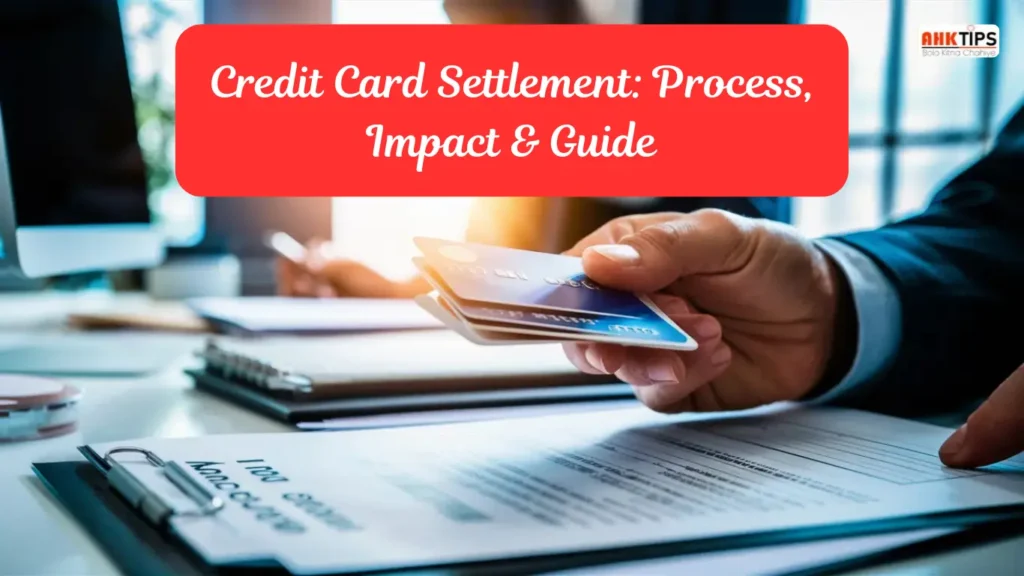

Credit card settlement is a financial option available to individuals who are unable to repay their full credit card dues due to situations like job loss, medical emergencies, or business failure. In this process, you negotiate with the bank to pay a reduced lump sum amount, which is accepted as full repayment. While this can offer quick relief from mounting debt and legal action, it comes with drawbacks.
When you settle your credit card debt, the account is marked as “settled” instead of “paid in full,” which can negatively affect your credit score for up to seven years. This makes it harder to get loans or credit cards in the future.
Before choosing a settlement, it’s important to evaluate your finances, understand the consequences, and explore alternatives like debt consolidation or credit counseling. The process involves gathering documents, negotiating with the bank, and getting a written agreement.
Though helpful in emergencies, credit card settlement should only be a last resort. With proper planning and professional advice, you can manage your debt smartly and work toward long-term financial stability.
Credit card settlement is a financial lifeline for individuals struggling to repay their outstanding credit card debt. It involves negotiating with your card issuer to pay a reduced lump sum, which is accepted as full repayment. This option is typically considered during financial hardships, such as job loss or medical emergencies, when repaying the entire balance becomes unmanageable.
While settlement provides immediate relief by reducing your debt burden, it comes with consequences. The account is marked as “settled” rather than “paid in full,” which negatively impacts your credit score and remains on your credit history for up to seven years. This can make future borrowing more challenging.
Credit card settlement is a last-resort solution and requires careful planning. Exploring alternatives like debt consolidation or credit counseling is advisable before proceeding. By understanding its implications and preparing thoroughly, you can navigate this process responsibly and work toward financial stability.
A credit card settlement is a financial agreement between you and your card issuer that helps resolve outstanding debt when you cannot pay the full amount. Instead of repaying the entire balance, you negotiate to pay a reduced lump sum, which the issuer will accept as payment in full.
This process can provide relief during financial hardship, but it comes with consequences. Settling your debt negatively impacts your credit score, as the account will be marked as “settled” instead of “paid in full.” This can make future borrowing more difficult.
To initiate a settlement, start by assessing your finances. Then, contact your issuer to negotiate terms. Once an agreement is reached, make sure to document the settlement in writing and pay the agreed amount promptly.
While settling your debt can reduce your financial burden, it should be considered a last resort due to its long-term effects on your creditworthiness. It may be worth exploring alternatives such as debt consolidation or credit counseling.
Credit card settlement is a financial strategy often chosen when repaying the full outstanding balance becomes unmanageable. Here are the key reasons:
While settlement can offer relief, it’s important to understand its consequences. It negatively impacts your credit score and is recorded in your credit history for up to seven years. Exploring alternatives like debt consolidation, counseling, or budgeting might be worth considering before opting for settlement. The pros and cons are to carefully make an informed decision.
Credit card settlement is a financial solution designed to help individuals manage overwhelming debt. Here are its key features:
While credit card settlement offers relief, it’s important to weigh its long-term consequences carefully. Seeking professional advice can help you make an informed decision and explore better alternatives.
To initiate a credit card settlement, you need specific documents to demonstrate your financial situation and negotiate effectively. Here are the key requirements:
Having these documents ready ensures a smoother negotiation process and strengthens your position. It’s essential to keep all records updated and accurate to avoid delays or complications during the settlement process.
Before opting for a credit card settlement, it’s crucial to prepare thoroughly to ensure a smooth process and minimize risks. Here are the key steps:
Taking these steps helps you make informed decisions and strengthens your position during negotiations. Remember, settlement is a last resort, so explore all other options before proceeding.
The credit card settlement process is a structured approach to resolving outstanding debt when repayment becomes challenging. Here’s how it works:
Before opting for a credit card settlement, it is essential to prepare thoroughly to ensure a smooth process and minimize risks. Here’s what you should do:
Credit card settlement can provide relief during financial hardship, but it comes with significant disadvantages. Here are the key points:
Credit Card settlement is a practical solution for individuals facing financial challenges and struggling to repay their outstanding debt. It provides immediate relief by allowing you to negotiate a reduced lump sum payment, helping to manage high-interest rates and mounting debts. However, the process is a double-edged sword—it offers short-term financial relief but has long-term consequences, such as a negative impact on your credit score, difficulty in obtaining future loans, and potential tax liabilities.
To make the most of this option, it’s crucial to prepare thoroughly by evaluating your finances, understanding the implications, and gathering the necessary documents. Additionally, exploring alternatives like debt consolidation or credit counseling can help you find less damaging solutions. While settlement offers a way to regain financial stability, it should only be consider as a last resort due to its effect on your creditworthiness.
By taking informed steps, negotiating strategically, and focusing on rebuilding your finances post-settlement, you can navigate this challenging situation responsibly. Seeking professional advice can further guide you toward the best course of action for your unique circumstances. Remember, careful planning and informed decisions are essential for achieving long-term financial health.
Que: What is the Settlement Process of Credit Cards?
Ans: The credit card settlement process involves assessing your debt, contacting the issuer, negotiating a reduced lump sum, providing necessary documents, formalizing the agreement, and promptly paying the settled amount.
Que: What happens when you do a credit card settlement?
Ans: When you settle a credit card, you negotiate to pay less than the full amount owed. The account is marked as “settled,” which lowers your credit score and stays on your report for seven years. While it provides financial relief, it impacts future borrowing and may lead to higher interest rates on loans.
Que: How to improve CIBIL score?
Ans: Here are six steps to improve your CIBIL score:
Pay Bills on Time
Maintain Low Credit Utilization Check Credit Report Regularly
Avoid Multiple Loan Applications
Clear Outstanding Dues
Build a Healthy Credit Mix
Que: Is Credit Card Settlement illegal?
Ans: No, a settlement is not illegal, The Credit Card Settlement is Legal Process, but it is indicated as a “Settled” status in your credit report, which affects your credit history.
Previous Post


Founded in 2015, Ahk Tips is a New Delhi-based financial advisor specializing in debt relief and loan management solutions.