
Loan settlement can be a sensible option when a borrower is unable to secure sufficient funds to pay their whole EMI or outstanding loan balance for some reason. Your loan is settled for a lesser amount through an agreement between the borrower and the bank or financial institution involved in the loan agreement. As much as loan settlement seems like a relief, being cautious is imperative because it can be detrimental to your CIBIL score for a long time, sometimes forever.
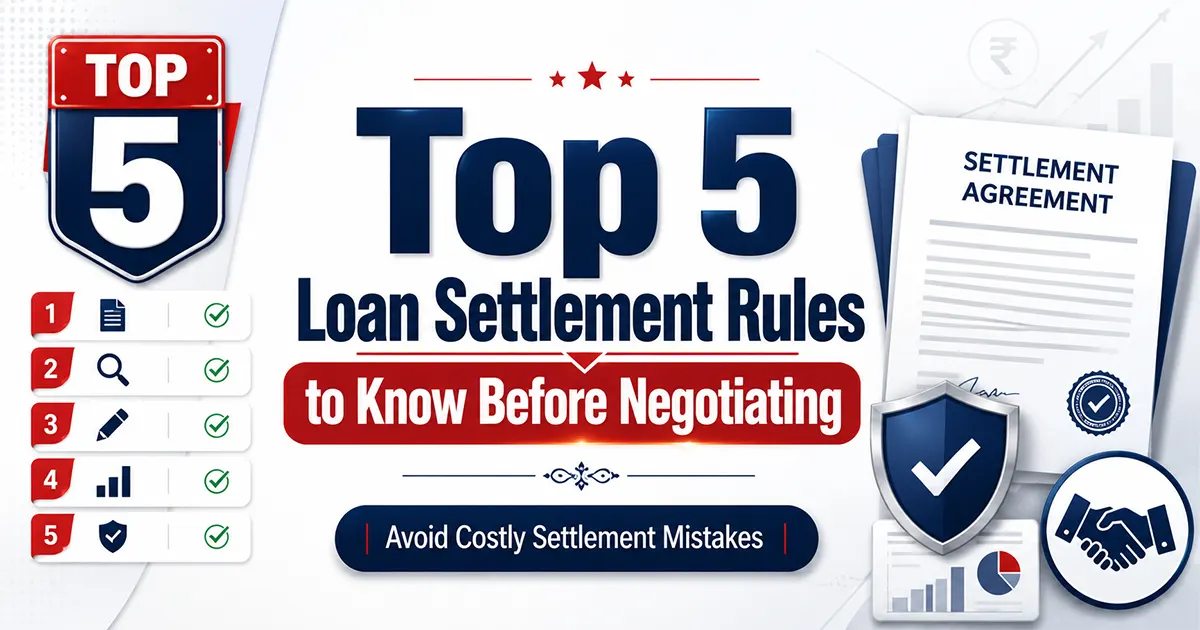
Before proceeding with a loan settlement, five rules are vital for you to keep in mind - first, the settlement will appear on your credit report in a "settled" status; second, every condition and agreement must be documented; third, once the loan is paid off, it is imperative to get the NOC and Settlement Letter; fourth, when negotiate with the bank, make sure you provide the correct documents and evidence to maximize the discount; and fifth, explore other options to see if loan restructuring or EMI moratorium options are better alternatives to settlement.
These rules will help you avoid trouble with the bank, reduce the risk of re-recovery, and avoid legal difficulties. Remember, loan settlement should be the last resort, not the first. Contemplate all your options, be careful, and seek professional advice and legal protection while using this process.
Since debt settlement has a direct impact on your credit score and financial future, all borrowers must comprehend these five criteria before proceeding. People frequently choose loan settlement when they are having trouble repaying their loans; in this case, they negotiate a lump sum payment with the bank or other financial institution.
Loan settlement, which is an arrangement whereby the bank agrees to waive a portion of your outstanding loan, is not a panacea. However, it may have a detrimental effect on your CIBIL score. Many people overlook this, which later causes them to have trouble obtaining new credit cards or loans. Second, being aware of your rights and RBI regulations before settlement is crucial because it shields you from deceptive recovery practices, exorbitant interest rates, and unstated fees.
In addition, the bargaining approach with the bank is crucial. To make your bargaining stronger, you should have documentation of your income, confirmation of your financial situation, and the specifics of the amount owed on hand. It's also important to remember that the details of the settlement should never be verbally agreed upon; instead, they should always be in writing. Customers frequently pay without providing written documentation, and the bank subsequently requests the unpaid balance.
To help you make informed decisions and safeguard your financial future, we will go into great detail in today's post on the top 5 things to know before loan settlement. If you thoroughly comprehend every part of debt settlement, it can be a successful solution for you if you are prepared and have the appropriate knowledge.
It is a financial process in which a bank or financial institution allows the loan taker to settle the loan by paying a lesser amount than the entire outstanding loan amount. This facility is for individuals who are unable to repay their loans on time and have a history of continuous default.
Under a settlement, the bank can agree on a lump sum amount, which closes the loan. However, it is essential to note that settling the loan can negatively impact your CIBIL score, potentially making it more challenging for you to obtain a loan in the future. Therefore, it should be adopted only as a last option.
When a person is unable to pay the EMI of his loan on time and the outstanding amount accumulates over a long period, the bank or financial institution offers the option of loan settlement. In this, the bank allows the customer to pay a discounted amount instead of the entire outstanding amount, thereby settling the loan matter.
The process of settlement comprises discussions between the bank and the customer, wherein the bank assures that the customer can't pay the entire loan amount. Thereafter, the bank issues a single-payment offer, which is typically lower than the outstanding loan balance. On the payment of this settled amount by the customer, the bank marks the loan as "Settled". Yet, this is not good for the CIBIL score since it is not treated as a "Complete Payment".
Hence, loan settlement should be opted for as a matter of last resort, and if at all possible, loan repayment schemes, loan restructuring, or alternative financial solutions must be opted for so that the credit rating is not impacted.
The following documents are required:
Aadhar Card, PAN Card, Passport, or Driving License, etc.
Salary slips, income tax returns, bank statements, etc.
Loan Settlement letter, loan details, payment receipts, etc.
Investment documents, property documents, insurance policies, etc.
If you want to apply it online, then follow the easy steps given below:
Visit the bank's website or app.
Open the official website or mobile app of your loan provider or bank.
Sign up if you already have an account, then log in. Otherwise, create a new account.
Check the customer support section.
Go to the 'Customer Support' or 'Contact Us' section on the website or app.
Here, you can find the option related to "Loan Settlement", such as:
Filing a loan-related complaint.
Request form for loan settlement.
Fill out the request form for the settlement.
Select the "Loan Settlement Request" option.
Fill in the required details, such as:
Your name
Loan account number
Email ID and mobile number
Reason (why you want to settle, such as financial problems or reduction in income).
Upload the required documents.
Upload documents that show your current financial situation, such as:
Income certificate or salary slip
Bank statement
Any other proof that explains your problem?
Upload all the documents by scanning them in the correct format (PDF or JPEG).
Submit and wait for the bank's response.
Once you have submitted the form, the bank will verify your request.
The bank will most likely contact you within 7-10 working days. They will notify you of the settlement through email, call, or message.
Read the bank's offer.
The bank will make an offer to waive some portion of your pending amount. Carefully read it.
If you accept the offer, go ahead. Otherwise, bargain further.
Make payment
Pay the decided settlement amount from the bank in online payment mode.
The bank will provide a payment confirmation and close your loan account.
Although both Loan Settlement and Credit Card Loan Settlement aim to provide relief to the borrower, there are some important differences between them.
|
Points of Difference |
Loan Settlement |
Credit Card Loan Settlement |
|
Type |
Settlement of any type of loan (personal, home, car, education, etc.) |
Settlement of Credit Card dues only |
|
Settlement Process |
The bank fixes a lump sum amount, on payment of which the loan gets settled. |
The credit card company settles the amount at a fixed rate. |
|
Impact on CIBIL score |
CIBIL score may drop by 50-100 points, and it may become difficult to get a loan in the future |
There is a huge impact on the CIBIL score, and it may be difficult to get a new credit card. |
|
Possibility of getting a loan in the future |
You may face problems in getting a home loan, a car loan, or any other loan. |
Credit card companies may refuse to issue the card. |
Loan Settlement has a direct and negative impact on your CIBIL score. When a person takes a loan from a bank or NBFC and is unable to repay the entire amount due to some reason, the bank gives him a chance to make a settlement, which is called a Loan Settlement.
However, there is a huge difference between a Loan Settlement and a Loan Closure. If you close your loan by repaying its full amount, it is recorded as "Closed" in your credit report, which improves your CIBIL score. But if you have some amount of the loan waived off under an agreement with the bank, it is reported as "Settled", which can harm your credit score.
When a bank or NBFC reports to CIBIL that your loan is "settled", your score drops immediately. The amount of drop depends on how good your score was earlier.
Banks and financial institutions put customers who have settled their loans in the "high-risk" category. This means that in the future, if you try to take any type of loan (personal, home, car, or education), your application may be rejected.
If you have settled a loan, it may be difficult to get a credit card from any bank in the future. Banks look at your credit history, and if they see a "settled" status, they may refuse to give you a credit card.
Even if a bank decides to give you a loan, you may get the loan at a very high interest rate. This is because banks consider you a risky customer and charge a higher interest rate to protect their money.
Loan settlement information remains in your CIBIL report for at least 7 years. This means that even if you improve your financial behavior later, your settlement record will continue to be visible to banks and may affect your creditworthiness.
If you have settled the loan and now want to improve your CIBIL score, then you can take the steps given below:
Pay all loan and credit card bills in full on time.
If possible, try to change the "Settled" status to "Closed" by contacting the bank.
Use credit cards limitedly and make full payments on time.
Take a small loan and repay it regularly to build a new good credit history.
Check the CIBIL report regularly and request that CIBIL rectify any mistakes.
Here are some important points to consider that will help you choose the right Loan Settlement service:
Check the service provider's credentials.
Before hiring a settlement service, make sure that the service provider you are hiring is registered and certified with financial institutions and banks. Only a reliable service provider can provide you with the right guidance and support. Checking online reviews and customer feedback is a good way to do so.
Check the service charges and other expenses.
Many service providers also charge a service fee, but make sure that the charges are not high and there are no hidden costs. Negotiate with the service provider beforehand about which services are free and which you will have to pay extra for.
Customer support and communication
A good service provider will always stay in touch with the customer and resolve their problems properly. Make sure they answer your questions quickly and are ready to work with you in any difficult situation.
Join our service
If you are also trapped in the debt trap and are facing a financial crisis, and want to adopt the path of Loan Settlement, then you can apply for our Loan Settlement service. We will help you settle your loan. Along with this, we provide you relief from the burden of the loan within 6 - 8 months. If you want to get more information about our service, then you can contact us.
The time taken for the settlement process also depends on various factors, such as the policies of your bank or lender, the outstanding amount, and the communication between the two of you. Usually, this process can take from 1 to 3 months.
The first action in the process of settlement is to approach the bank, where you tell your problem and payment status to the bank. Then, the bank proposes a settlement offer according to your situation. In case you agree with that proposal, you need to pay the amount to the bank within the agreed time. The bank indicates the loan as settled, and this would take some time.
The longer this entire process continues, the more it can impact your CIBIL score, so it is preferable to resolve the issue sooner.
Let us understand the difference between them in simple language:
1. Definition
Loan Settlement: It is a mutual agreement between a bank and a borrower. In this, the bank accepts that the borrower cannot repay the entire loan, so it takes a fixed amount and forgives the remaining amount.
Bankruptcy: It is a legal process. When a person or organization is unable to repay its total liabilities, it applies for bankruptcy in the court, and the court decides how its assets will be distributed.
2. Process
Loan Settlement: It is an illegal process that takes place directly between the bank and the customer. No court is involved in this.
Bankruptcy: It is a judicial process in which the court and insolvency professionals are involved.
3. Debt Relief
Loan Settlement: After paying some part of the loan, the rest of the loan can be waived off, but the CIBIL report has a tag of “Settled”.
Bankruptcy: The court decides which loans will be waived off and which will not. This can get rid of the debt completely, but the property can be confiscated.
4. Effect on CIBIL score
Loan Settlement: CIBIL score has a serious negative impact. The tag of “Settled” can become an obstacle in getting a loan in the future.
Bankruptcy: CIBIL score falls completely, and it has a long-term impact.
5. Cost & Time
Loan Settlement: This process is completed quickly, and there are no legal expenses.
Bankruptcy: This can be a long and expensive process, which requires lawyers and professionals.
It has the following advantages and disadvantages:
Advantages
Loan Settlement improves the financial condition of the borrower.
By doing a Loan Settlement, you can manage your income and costs better and avoid a financial crisis in the future.
The heavy burden of debt often causes mental stress. With Loan Settlement, the borrower gets relief from this stress, and he can find mental peace in his life.
Through Loan Settlement, the borrower gets a chance to get part of their debt waived off.
This helps to improve his financial condition and gives him relief from a heavy financial burden.
Although a Loan Settlement can affect the borrower's credit score, by following the agreement on time and properly, he can gradually improve his credit score.
Disadvantages
In the future, the borrower may have difficulty getting loans from these institutions.
Through Loan Settlement, the entire loan of the borrower is not waived off. He still has to pay some amount, which can affect his financial condition.
During a Loan Settlement, the agreement between the bank and the borrower has many conditions. The borrower is required to follow these conditions, which can limit their freedom.
After a Loan Settlement, the borrower's credit score may be affected.
Loan Settlements may create difficulties in taking new loans or obtaining credit cards in the future.
Due to a Loan Settlement, the borrower's relationship with the bank and other financial institutions may deteriorate.
Before doing a loan settlement, you must know these 5 important rules, so that you can make the right decision without making mistakes and keep your financial future secure:
1. Impact on CIBIL score
Loan settlement means that you have not repaid the entire loan, but have paid a lesser amount as per the agreement. This results in a "Settled" status in your CIBIL report, which can affect your credit score for up to 7 years. The effect of this will be that it may be difficult to get a new loan or credit card in the future.
2. Need for written agreement
Always take all the terms of the settlement in writing. Avoid relying only on verbal, because later the bank or NBFC can again claim the outstanding amount. It is important to mention the fixed amount, date of payment, and "Full & Final Settlement" in the written agreement.
3. Process of No Dues Certificate (NOC) before payment
After paying the settlement, it is important to immediately get a NOC and Settlement Letter from the bank. This will be proof that your case is over, and no further legal or financial claims will be made.
4. Proper negotiation and documentation
Keep all the proof of your financial situation ready before settlement (income proof, medical expenses, proof of job loss, etc.). This will strengthen the negotiation with the ba,nk and you will be able to decide on a better discount or installment plan.
5. Comparison of options
Before settlement, check whether options like Loan Restructuring, EMI Moratorium,ium, or Top-up Loan may be better for you. Many times, these options prove to be more beneficial than settlement and also have less impact on the CIBIL score.
Let us understand in simple words.
When a person or company is unable to repay the entire loan to the bank, the bank makes a settlement with them. In this:
Part of the principal amount or interest is waived.
The customer is given the option to pay a lump sum amount or in easy installments.
This solution is usually done by mutual consent between the bank and the customer.
Under the IBC Code 2016, when a defaulter is unable to repay the loan on time, the bank or lender can start the IBC process against him. In this:
There is a process of declaring a company or a person bankrupt.
A Resolution Professional is appointed.
A way is found to repay the loan by selling the company's assets.
The entire process is completed in a maximum of 270 days.
Now let's talk about the real connection:
a. Part of the resolution process:
When action is taken against a defaulter under IBC, the solution often comes in the form of a settlement plan. In this, the banks get a fixed amount, and the company gets relief from the remaining loan. This is a kind of loan settlement, but it is legally controlled and approved by the NCLT.
b. Means of pressure:
When a person or company does not repay the loan, the banks negotiate a settlement by threatening to initiate the IBC process. This forces the defaulter to negotiate and settle.
c. Safe path:
Loan settlement done through IBC is more transparent, judicial, a nd timely. This provides reliable recovery to the banks and legal relief to the defaulter.
Below, we will know in detail how this can be done.
1. First, contact the bank
When the loan is declared as NPA, the borrower should first contact their bank or financial institution directly.
Instead of getting scared, talk.
Tell the bank about your financial situation.
Tell them that you want to repay the loan but cannot make the full payment in the current situation.
2. Ask for an OTS (One-Time Settlement) proposal
Banks often bring the OTS scheme for NPA accounts, in which
Some amount is waived,
The remaining amount has to be paid in a lump sum or installments.
3. Take the settlement deal in writing (Settlement Letter/NOC)
If the bank accepts your settlement proposal, then:
Take a written settlement letter from them.
After completing the payment, do not forget to take the NOC (No Objection Certificate).
This will serve as proof for you in the future.
4. Understand the impact on CIBIL score
The settlement of an NPA loan affects your CIBIL score.
Your score may fall for some time.
But by paying other bills/credit cards/EMIs on time, you can improve the score again.
5. Avoid default again in the future
Do financial planning.
Take a loan only as per your need.
Pay installments on time.
Spend according to your budget.
Loan settlement is an important but sensitive financial decision that should never be rushed or made on incomplete information. Loan settlement provides temporary relief from debt (if you settle, you will experience a significant reduction in your debt obligation), but it is also important to be aware of and understand the long-term consequences of loan settlement. Following the top 5 important rules before settlement, such as: CIBIL Score, ensure you have a written agreement, ensure you have a NOC and Settlement Letter, negotiate properly, carefully document your negotiation and process, and compare with other options, will help to build a shield around you.
If you settled without the benefit of written proof or legal advice, and careful documentation, you could (at a later date) find yourself in a dispute with the bank or other financial institution over settlement or a demand for recovery again, or your credit score could drop to below average. On the other hand, if you keep those rules in mind, have a strong negotiation strategy, and complete the process with documentary evidence, then it could prove to be a safe process you can use to clear your debts.
Just for your information, loan settlement represents a solution to a current debt problem, but it will affect future credit opportunities in terms of risk and lending policy. Therefore, be thoughtful with every step you take and seek appropriate professional advice. With the
Que: What is the difference between loan settlement and loan repayment?
Ans: Loan repayment means paying the fixed amount of the entire loan and interest on time. Loan settlement means that the bank waives some amount and closes the account with the remaining amount.
Que: Does loan settlement affect the CIBIL score?
Ans: Yes, Loan Settlement is shown as “Settled” in the CIBIL report, which may affect your creditworthiness in the future. This may reduce the score.
Que: What is the OTS (One Time Settlement) scheme?
Ans: OTS is a scheme in which the bank gives the borrower a chance to get rid of the loan by paying a fixed amount in a lump sum (or in fixed installments). In this, some interest or principal can be waived.
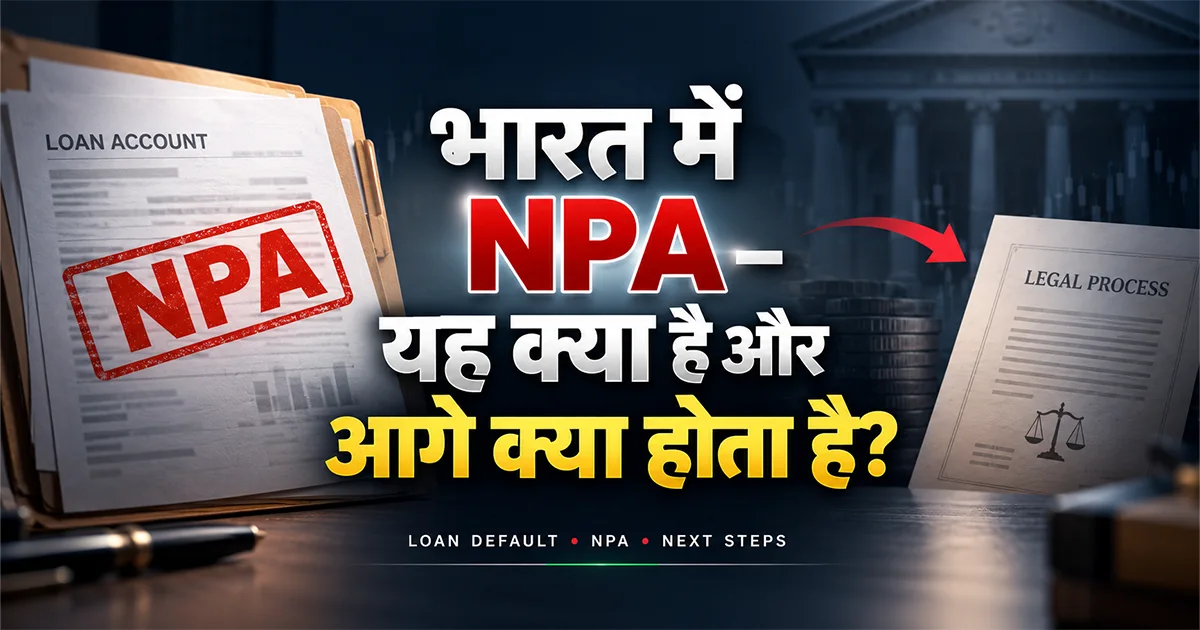
Que: What is NPA?
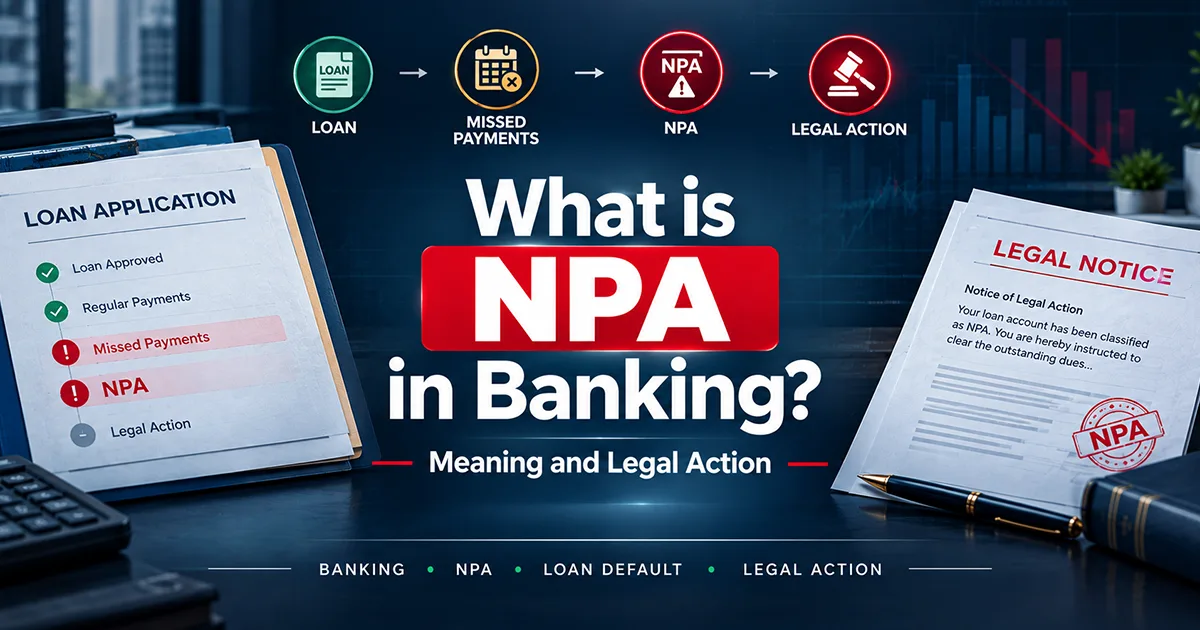
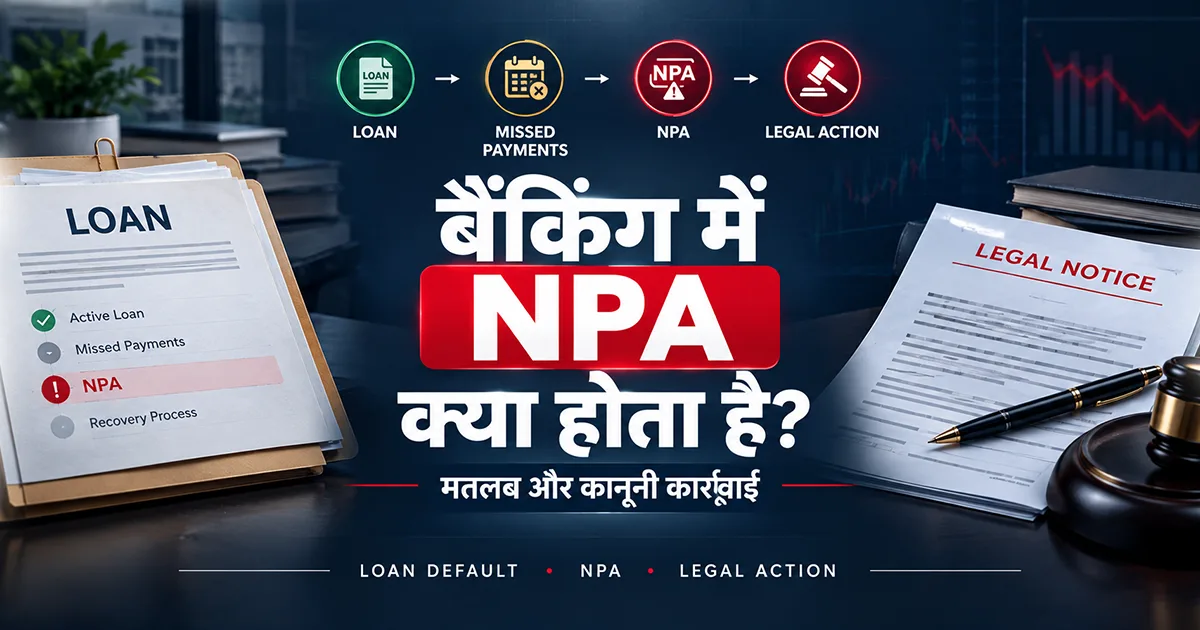
Ans: NPA means Non-Performing Asset, that is, a loan whose EMI or interest installments have not been paid for more than 90 days (3 months). Banks consider such loans as "bad loans" and declare them NPA.
Que: Can the loan be repaid even after being declared an NPA?
Ans: Yes, the loan can be repaid even after being declared an NPA. For this, you can contact the bank and arrange to pay through One-Time Settlement (OTS) or in installments.

Founded in 2015, Ahk Tips is a New Delhi-based financial advisor specializing in debt relief and loan management solutions.