

Loan settlement is an option that seems like a relief in times of financial crisis. However, on the other hand, it has many hidden charges that can prove to be costly for you if ignored. Therefore, it is very important to understand these hidden charges before loan settlement.
First of all, you should read the settlement letter carefully. Apart from the amount mentioned in it, many charges can be added under different heads like “Other Charges”, “Processing Fee”, “Penalty Interest”, “Legal Charges”, and “GST”. After this, ask the bank properly to know the actual reason behind these charges and whether these charges have been levied and whether they can be reduced or waived.
Then, compare your settlement amount and your initial outstanding amount to understand if you are getting relief or not. At times, because of concealed charges, you need to pay extra in the name of settlement.
Lastly, after depositing, get a written confirmation from the bank that you have completed the final payment and no dues are pending now. In this way, you will be free from any future legal or credit score-related issues.
In today’s time, when people suddenly need money, they often take the path of taking a loan from a bank or financial institution. As easy as it is to take a loan, it can be equally difficult to repay it on time. Sometimes, circumstances become such that a person is not in a position to repay the entire loan, and then the option of “Loan Settlement” comes up. This is a solution in which the bank or financial institution settles the loan by taking a fixed amount from the person taking the loan. But do you know that many hidden charges are also associated with this process, which can later trouble you financially?
Now the question arises – what are these Hidden Charges, and why is it important to understand them? When we go through the process of Loan Settlement, banks can add many types of charges like processing fees, legal charges, penalty interest, etc. These charges are not told to you directly, but are recorded somewhere in small letters in the Loan Settlement papers. In such a situation, if you do not read the documents carefully, you can pay a large amount without knowing about it.
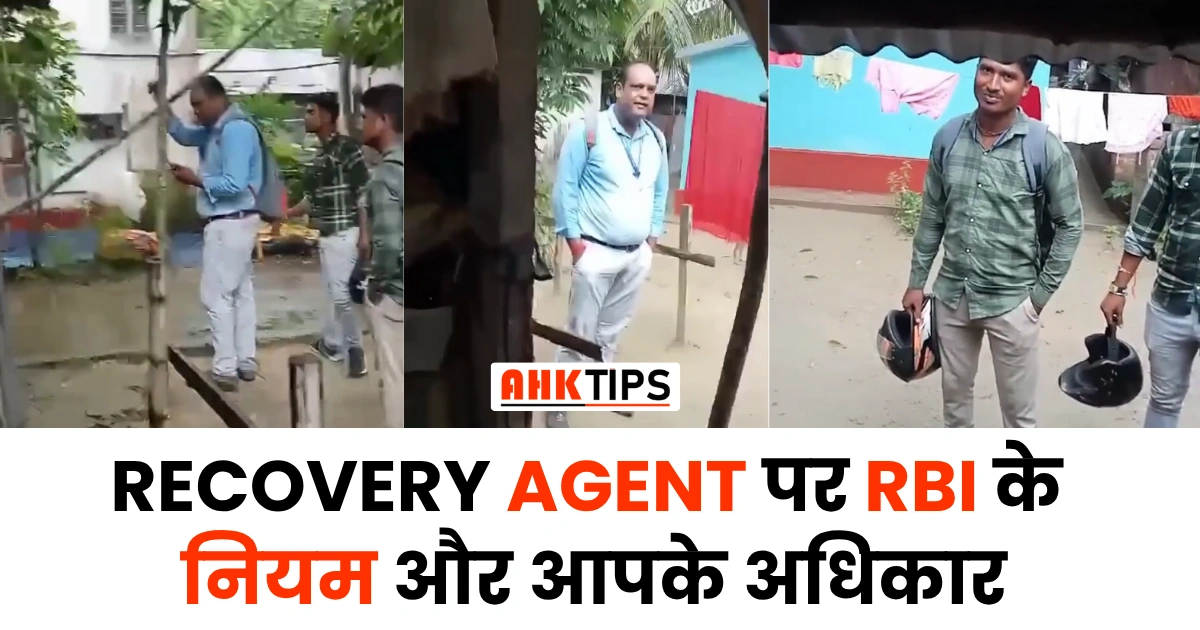
Apart from this, many times, agents or third-party recovery companies also ask for additional fees in the name of Loan Settlement, which may be against the rules. Therefore, it becomes very important that you understand all the charges and ask questions related to them before signing any papers in this process.
That is why in this article we will talk about how to identify all those hidden fees or charges related to Loan Settlement, how to avoid them and what things to keep in mind so that you can protect yourself from any kind of fraud or additional financial burden.
This is a financial process in which the bank or financial institution allows the loan taker to settle the loan by paying a lesser amount instead of paying the entire outstanding loan amount. This facility is for those people who are unable to repay their loan on time for some reason and are continuously defaulting.
Under a settlement, the bank can agree on a lump sum amount, after which the loan is closed. However, it is important to note that loan settlement can affect your CIBIL score, which may make it difficult for you to get a loan in the future. Therefore, it should be adopted only as a last option.
The option of loan settlement is adopted when you are not in a position to repay the full amount of the loan and the bank closes the loan by taking a fixed amount. Although, at first glance it seems to be a relief solution, but there are many hidden charges in it which are often added without telling us. Now the question arises that what are these hidden charges? Let us understand them in sequence and simple language.
1. Processing Fee
First of all, when you accept the offer of loan settlement, the bank or NBFC may charge a processing fee. This fee is charged for the process in which your case is evaluated.
2. Legal Charges
Apart from this, if your case is very old or the bank has sent you a legal notice, then the expenses incurred on it can also be recovered from you. This expense can be added to your settlement amount or can be demanded separately.
3. Penalty Interest
Again, if you have not paid the EMIs or loan installments on time, penalty interest is also added for that period. These rates can be much higher than the normal interest rate, and this amount is included in the final settlement amount at the time of settlement.
4. Recovery Agent Charges
Apart from this, if your case is transferred to recovery agents, some agencies may ask for additional charges for their recovery services.
5. GST and other taxes
Finally, you may also have to pay GST or other taxes on any service charges levied in the settlement process. These small charges together can have a big impact on your pocket.
When a person is unable to pay the EMI of his loan on time and the outstanding amount accumulates over a long period, the bank or financial institution offers the option of loan settlement. In this, the bank allows the customer to pay a discounted amount instead of the entire outstanding amount, thereby settling the loan matter.
The process of settlement comprises discussions between the bank and the customer, wherein the bank assures that the customer can’t pay the entire loan amount. Thereafter, the bank issues a single-payment offer, which is typically lower than the outstanding loan balance. On the payment of this settled amount by the customer, the bank marks the loan as “Settled”. Yet, this is not good for the CIBIL score since it is not treated as a “Complete Payment”.
Hence, loan settlement should be opted for as a matter of last resort, and if at all possible, loan repayment schemes, loan restructuring, or alternative financial solutions must be opted for so that the credit rating is not impacted.
The time taken for the settlement process also depends on various factors, such as the policies of your bank or lender, the outstanding amount, and the communication between the two of you. Usually, this process can take from 1 to 3 months.
The first action in the process of settlement is to approach the bank, where you tell your problem and payment status to the bank. Then, the bank proposes a settlement offer according to your situation. In case you agree with that proposal, you need to pay the amount to the bank within the agreed time. The bank indicates the loan as settled, and this would take some time.
The longer this entire process continues, the more it can impact your CIBIL score, so it is preferable to resolve the issue sooner.
If you want to apply it online, then follow the easy steps given below:
Visit the bank’s website or app.
Check the customer support section.
Fill out the request form for the settlement.
Upload the required documents.
Submit and wait for the bank’s response.
Read the bank’s offer.
Make payment
The impact can be seen in the following ways:
It has the following advantages and disadvantages:
Advantages
Disadvantages
However, it is a legal process, and it is necessary to follow certain rules to do it.
1. Bank’s action in case of default
If you are unable to pay the loan EMI for 3 to 6 months continuously, the bank can declare it as NPA (Non-Performing Asset). After this, the bank can start the recovery process against you. Under the SARFAESI Act, 2002, the bank gets the right to seize your mortgaged property (collateral) and recover the outstanding amount by auctioning it.
2. Request a loan settlement from the bank
If you are financially weak and are unable to repay the entire outstanding amount, then you can request a One Time Settlement (OTS) or Negotiated Settlement. For this, you will have to give an application form (Loan Settlement Request Letter) to the bank, in which you will have to prove your financial position.
3. A Settlement Offer is given by the bank
After examining your situation, the bank gives a Settlement Offer, which decides the total amount you have to pay. This is usually less than the outstanding amount, but the bank’s consent is necessary for this.
4. Sign the Settlement Agreement
If you accept the offer given by the bank, you will have to sign a written agreement. It will be mentioned in it that after the settlement, the bank will not take any further legal action against you.
5. Pay the Settlement Amount
After signing the agreement, you have to pay the Settlement Amount within the stipulated time frame. The payment is usually made in a lump sum.
6. Get a No Dues Certificate (NOC)
Once you pay the settlement amount, the bank has to issue you a No Dues Certificate (NOC) to certify that your loan is now fully settled.
Let us know what the right way to understand these hidden charges is – that too in simple language and with transition words.
1. First of all, read the settlement letter carefully
Whenever a bank or financial institution offers you a settlement, they give a written document (Settlement Letter). At this time, you should first read that letter carefully. Look carefully at the amount, time limit, a nd additional charges given in it.
2. After this, pay attention to ‘Other Charges’ or ‘Miscellaneous Fees’
There is usually a column in the settlement letter where words like “Other Charges”, “Processing Fee”, “Legal Fee”, or “Late Payment Charges” are written. Remember, this is the place where hidden charges are hidden.
3. Then, inquire with customer care
If you don’t understand any term, ask the bank or customer care directly. Ask “Why was this charge imposed?”, “Can it be waived?” and “Will I have to pay GST for this as well?”
4. Then – Compare the Settlement Amount and Outstanding Amount
Now, compare the amount demanded in the settlement with your original loan amount and the payments made so far. Sometimes the settlement amount is increased more than necessary due to hidden charges.
5. Finally – Get written proof
Whenever you are ready for settlement, at that time, make sure to get it in writing from the bank that, after settlement, no additional charges will be levied and the account will be closed. This document can help you legally in the future.
Finally, when it comes to loan settlement, it is very important to understand that just reducing the outstanding loan amount is not the solution. Along with this, the hidden charges that are there can silently affect your financial situation. In other words, if you do not understand these charges properly, then you will settle the loan thinking that you have got relief from the bank, but in reality, you can move towards another financial problem.
Apart from this, many times people sign the documents on the instructions of the agent without reading them, due to which they are later forced to pay many types of charges like processing fees, legal charges, penalty interest, and GST. Therefore, it becomes necessary that you read and understand every paper, every amount, and every condition closely.
Another important thing is that, even after settlement, it is important that you get a clear statement from the bank that there will be no further charges or recovery and your account has been completely closed. In this way, you can protect yourself from any unwanted legal or financial troubles.
Que: Can the bank refuse to settle the loan?
Ans: Yes, the bank can also refuse to settle the loan if it feels that the borrower is financially capable of repaying the loan. Settlement depends on the discretion of the bank, and it is not compulsorily made available to any customer.
Que: Is it possible to get a loan after settling the loan?
Ans: Yes, but it can also be difficult. After settling the loan, the CIBIL score decreases, which may cause difficulty in applying for a new loan or credit card in the future.
Que: Can the bank take any legal action against me after the settlement?
Ans: No. If you have repaid the fixed amount as per the Settlement Agreement and the bank has issued you a No Dues Certificate (NOC), then the bank cannot take any legal action against you.
Que: Is it right to settle the loan without a written agreement?
Ans: No! It is very important to get a settlement agreement in writing from the bank before settling the loan, and then a No Dues Certificate (NOC). Settling without written documents can create problems in the future.
Que: Can loan settlement also close credit cards?
Ans: Yes, if you have any other credit cards and the bank finds out that you have settled the loan, they can reduce the limit of your credit card or even close it.
Previous Post

Founded in 2015, Ahk Tips is a New Delhi-based financial advisor specializing in debt relief and loan management solutions.