
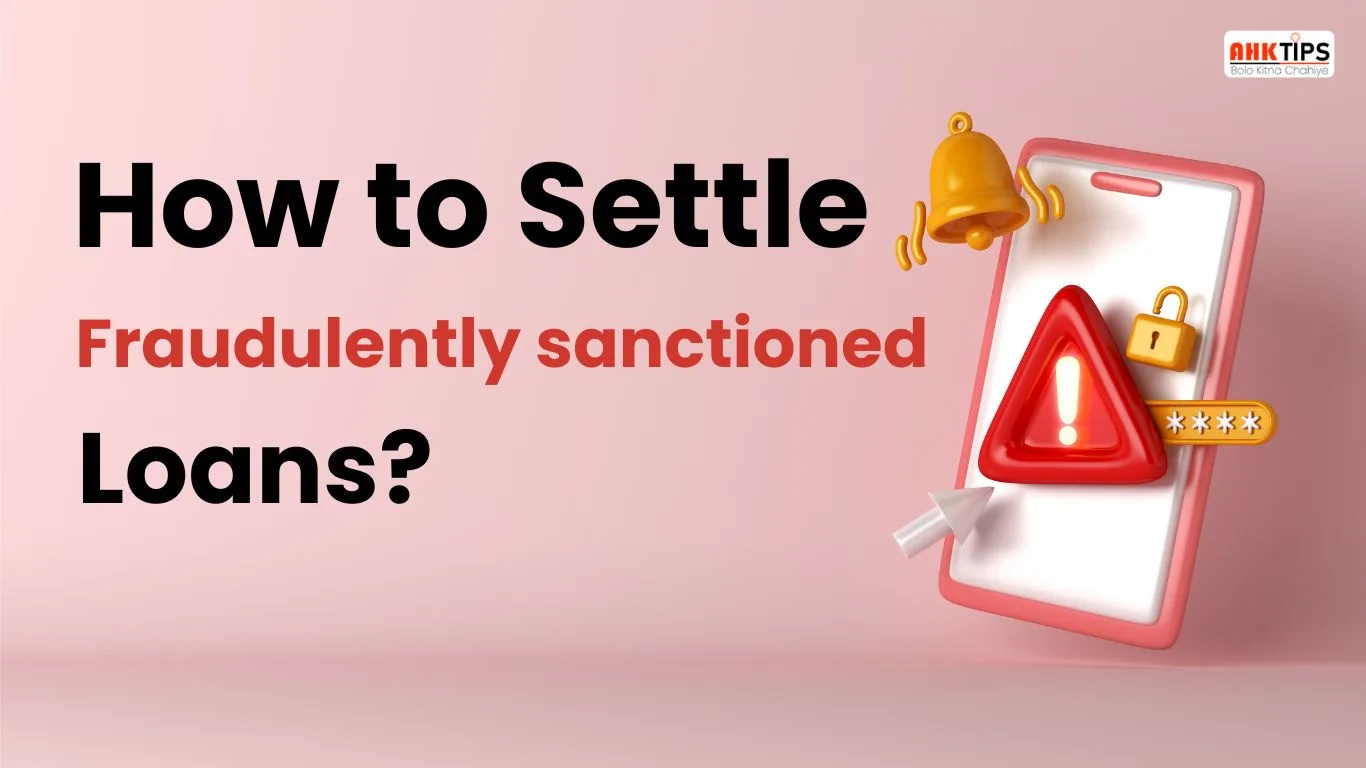

Fraudulent loans that were approved are loans (Loan Settlement) borrowed in your name and details without your knowledge. It can negatively impact your credit history, financial standing, and state of peace of mind. However, if you respond quickly and follow the right course of action, you can shield yourself and put the situation right.
Start by being calm and putting together all the evidence that shows you did not borrow or use the loan. Report the case to the bank or financial institution involved immediately and make your complaint with all the proof. Parallelly, make an FIR to the police station, which is strong legal support for your case. Moreover, inform fraud bureaus such as CIBIL, Experian, etc., so they can put a fraud notice on your credit report and prevent further harm.
Follow up regularly with the bank and the police. Log all your letters, emails, and calls. If the bank is not being cooperative or simply taking too long, you might approach the Banking Ombudsman or try legal action by going to the consumer court or civil court.
Sometimes, people find out that a loan has been borrowed in their name without them knowing. This can happen through fraud, mistakes, or misuse of personal information. It is a pretty stressful and scary experience because it affects your financial life, credit report, and peace of mind. If you sit tight, you could end up repaying a loan you never took, or worse, be involved in illegal activities. It is therefore vitally important that you move and make intelligent choices the moment you detect a fraudulently authorized loan.
First of all, you should be cool and take every bit of proof that you couldn’t have applied for or received the loan. Such proof might be your bank statements, emails, mobile texts, or bank letters. After collecting the proof, you must visit the bank or the financial institution that provided the loan at once. Describe your situation concisely and politely. Show them all the evidence in favor of the fact that you are a victim of fraud.
You have to report the incident to the police as well. This is called an FIR (First Information Report). The FIR will act as official proof that you have informed the police about the fraud. It will protect you from a legal standpoint and show that you do not own the loan. Along with the police, you have to report to credit agencies like CIBIL, Experian, and Equifax.
Many times, banks take their time to ask questions. In this case, you have to keep calling the bank and taking notes on all your conversations. If the bank admits that the loan was fraudulently approved, it will cancel or reverse the loan.
Loan Settlement is a process in which you negotiate with your creditor to forgive a part of the outstanding amount on your Loan by making a lump sum payment. It is an agreement that you make with your card issuer as a last resort when you see that your Loan debt is increasing.
This can happen due to many reasons, ranging from unnecessary spending to careless spending habits. When your debt increases, the interest on it also increases, which can make it difficult for you to repay the outstanding amount. If you do not see any way out of this, then you can recommend a Loan Settlement.
Below are some common reasons:
Let us know what documents are required for a Loan Settlement.
1. ID Proof
2. Address Proof
3. Income Proof (if required)
4. Loan Statement
You will have to provide the Loan statement to give the correct information about your outstanding balance. The bank can also generate this statement itself, but sometimes they ask you for a copy of it.
5. Settlement Request Letter
If you are approaching the bank for settlement on your own, you will have to give a written Settlement Request Letter in which you can explain:
6. Settlement Offer Letter given by the bank
When the bank agrees to the settlement, it gives you a Settlement Offer Letter. Read it carefully and confirm the amount and terms mentioned in it.
If you are unable to pay your Loan dues and are troubled by heavy interest rates, a Loan Settlement can be a possible solution. Under this process, the bank or Loan company can waive off part of your total outstanding amount and give you the option to make a lump sum payment (One-time Settlement). However, this can affect your CIBIL score, so adopt it only as a last option.
Below are some steps that should be followed before a Loan Settlement:
A settlement can hurt your credit score. The impact can be seen in the following ways:
Discovering you’ve had a loan taken out in your name against your will is scary. Do not panic — by correctly doing things promptly, you can prevent things and fix them properly. Follow these instructions to do that:
1. Stay Calm and Collect Proof
Don’t panic first.
<|python_tag|><|start_header_id|>assistant<|end_header_id|>.
Begin to collect as much evidence as possible to demonstrate that you did not receive or utilize the loan.
This may involve:
Tip: Make copies of everything — emails, posts, screenshots.
2. Get in touch with the Bank or Lender immediately
Request from them:
3. File a Police Complaint (FIR)
Finally, go to your local police station and report an FIR (First Information Report).
Tip: Photocopy the FIR — it is extremely important for all the subsequent processes.
4. Credit Bureau Reporting
Send a letter to credit bureaus such as:
Inform them of the fraudulent loan and enclose a photocopy of your FIR and complaint to the bank.
Request them to:
5. Regular Follow-ups
Police and bank investigations take time.
Regular follow-up:
Call/email the bank that reported the fraud to you weekly.
Stay in touch with the investigating office.
Keep a diary of each contact (date, person contacted, substance of conversation)
Tip: A Friendly but firm follow-up will accelerate the process.
Let us know what the benefits of doing a Loan Settlement are:
Let us know in detail what the disadvantages of doing a Loan Settlement are.
Finding out that a loan has been illegally approved in your name is one of the most frightening experiences in life. It can affect your peace of mind, financial well-being, and credit history. But the good news is: you can fight back and clear your name if you do it correctly and on time.
The very first and most important thing to remember is: don’t panic. Rather, stay calm and focus on gathering all the proof that establishes you as innocent. Contact the concerned bank or lender immediately and report the fraud. You need to lodge an FIR with the police, as it is your best legal proof. Moreover, make sure that you inform credit bureaus so that they put a fraud alert on your credit history and bar any further damage to your creditworthiness.
You must keep harassing the bank and police since fraud cases might take time to be solved. Never rely on verbal guarantees — get everything put in writing. If the need arises, approach senior authorities like the Banking Ombudsman or even the courts. Keep in mind that the law is with you when you are indeed a victim.
Que: How is loan settlement different from loan closure?
Ans: Loan closure means paying the whole loan amount as per the agreement, while loan settlement means paying half of it, and the remaining amount is waived off by the lender.
Que: Can I settle bank and private loans?
Ans: Yes, you can settle bank loans and private loans, but the process could be different. Banks have formal processes, while private lenders can have loose or even informal procedures.
Que: Will the settlement of a loan affect my CIBIL score?
Ans: Yes, the settlement of a loan lowers your CIBIL score and is reflected on your credit report for a few years. This makes it difficult to get future loans or credit cards.
Que: What is loan settlement?
Ans: Loan settlement is when the lender accepts a smaller amount of money than that which you owe and shuts down the account of the loan. It usually happens when the borrower is unable to repay the entire loan due to financial problems.
Que: Is loan settlement a good option?
Ans: Loan settlement will give you temporary relief, but it will bring your credit score down. It has to be done when there’s no option.

Founded in 2015, Ahk Tips is a New Delhi-based financial advisor specializing in debt relief and loan management solutions.