
Occasionally, the borrowers also go through financial crises and cannot return their loans in terms of time. In this scenario, they can ask for a settlement of the loan from the bank, which is a compromise agreement where the borrower pays a lesser amount than the actual amount to settle the loan. But banks don’t always agree. If the bank fails to respond or offers an unjustified settlement, you can turn to the Banking Ombudsman, which is a redressal agency operated by the Reserve Bank of India (RBI).
Before you approach the Ombudsman, you must attempt to settle the matter directly with your bank. Submit an application explaining your position and request for settlement. In case the bank fails to reply within 30 days or refuses to assist you, then you can approach the Ombudsman.
You can file your complaint in three ways – online through the RBI’s CMS portal, by email, or by post. Make sure that all documents that are pertinent to the complaint, such as the loan agreement, bank correspondence, and any proof of financial difficulty, are appended. Once the complaint is received, the Ombudsman will consider it, discuss the matter with the bank, and even arrange a meeting between the two.
In certain instances, people take a loan from banks to buy a house, a car, or for going to other personal needs. But due to unemployment, sickness, or some other financial downturn, they are unable to repay the loan on time. At this point, the loan becomes a burden, and banks resort to telephonic calls or send recovery staff to raise funds. Most individuals try to negotiate the loan with the bank, but sometimes the bank refuses to or imposes unreasonable demands. In those cases, a direct and lawful means of requesting help – complaining to the Banking Ombudsman – exists.
The Banking Ombudsman is the official empowered by the Reserve Bank of India (RBI) to help customers who have disputes with banks. This mechanism was created to ensure that customers are treated fairly by the banks. Loan settlement is one of the major issues people complain about.
Settlement of a loan is a process where the borrower and the bank agree to a mutual settlement of the loan account in terms of paying a part of the total outstanding amount. For example, if somebody has ₹5 lakh to pay back to the bank but is unable to do so, he can go to the bank and propose accepting ₹3 lakh as full and final settlement. Banks sometimes comply, and sometimes they deny or delay the process. That is where the Banking Ombudsman can help you.
In this piece, we are going to dissect it step by step on how to organize a settlement for a loan through the Banking Ombudsman, the papers required, the conditions that must be met, and how long it takes. It can be such a relief to the people who are struggling with loan stress without knowing where they are supposed to go.
Loan Settlement is a process in which you negotiate with your creditor to forgive a part of the outstanding amount on your Loan by making a lump sum payment. It is an agreement that you make with your card issuer as a last resort when you see that your Loan debt is increasing.
This can happen due to many reasons, ranging from unnecessary spending to careless spending habits. When your debt increases, the interest on it also increases, which can make it difficult for you to repay the outstanding amount. If you do not see any way out of this, then you can recommend a Loan Settlement.
Below are some common reasons:
Below are some steps that should be followed before a Loan Settlement:
Let us know what documents are required for a Loan Settlement.
1. ID Proof
2. Address Proof
3. Income Proof (if required)
4. Loan Statement
You will have to provide the Loan statement to give the correct information about your outstanding balance. The bank can also generate this statement itself, but sometimes they ask you for a copy of it.
5. Settlement Request Letter
If you are approaching the bank for settlement on your own, you will have to give a written Settlement Request Letter in which you can explain:
6. Settlement Offer Letter given by the bank
When the bank agrees to the settlement, it gives you a Settlement Offer Letter. Read it carefully and confirm the amount and terms mentioned in it.
Step-by-step process to apply for Loan Settlement
However, it is a legal process, and it is necessary to follow certain rules to do it.
1. Bank’s action in case of default
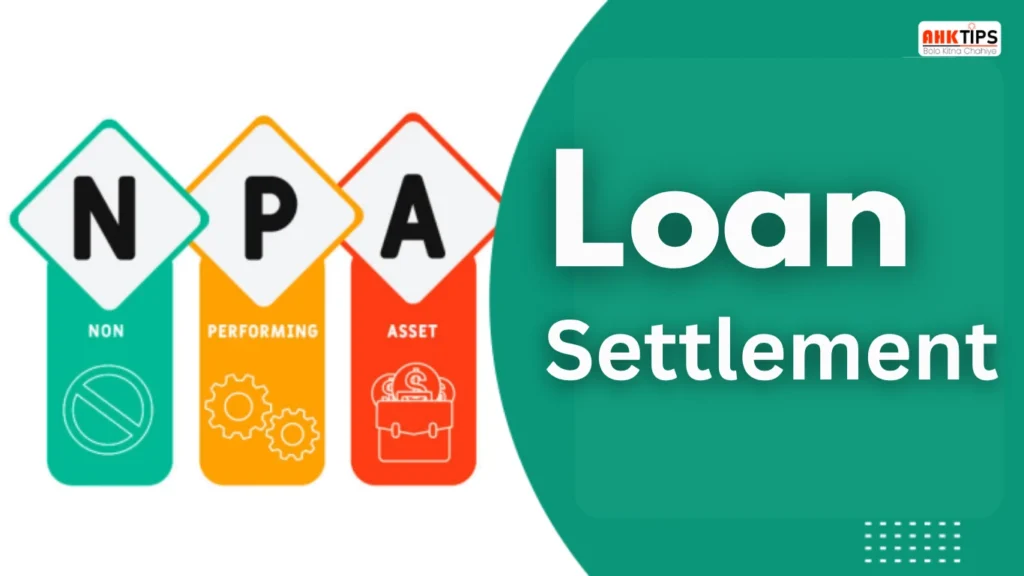
If you are unable to pay the loan EMI for 3 to 6 months continuously, the bank can declare it as NPA (Non-Performing Asset). After this, the bank can start the recovery process against you. Under the SARFAESI Act, 2002, the bank gets the right to seize your mortgaged property (collateral) and recover the outstanding amount by auctioning it.
2. Request a loan settlement from the bank
If you are financially weak and are unable to repay the entire outstanding amount, then you can request a One Time Settlement (OTS) or Negotiated Settlement. For this, you will have to give an application form (Loan Settlement Request Letter) to the bank, in which you will have to prove your financial position.
3. A Settlement Offer is given by the bank
After examining your situation, the bank gives a Settlement Offer, which decides the total amount you have to pay. This is usually less than the outstanding amount, but the bank’s consent is necessary for this.
4. Sign the Settlement Agreement
If you accept the offer given by the bank, you will have to sign a written agreement. It will be mentioned in it that after the settlement, the bank will not take any further legal action against you. Note that this is a very important legal document, so read it carefully and consult your lawyer.
5. Pay the Settlement Amount
After signing the agreement, you have to pay the Settlement Amount within the stipulated time frame. The payment is usually made in a lump sum.
6. Get a No Dues Certificate (NOC)
Once you pay the settlement amount, the bank has to issue you a No Dues Certificate (NOC) to certify that your loan is now fully settled. Without an NOC, the loan settlement is considered incomplete, so it is very important to get it.
A settlement can hurt your credit score. The impact can be seen in the following ways:
Here is a step-by-step process to help you know how to get a loan settlement done through the Banking Ombudsman:
1: Try to Settle the Loan with the Bank First
2: Gather Evidence
If the bank fails to reply or makes a poor offer, gather all the following documents:
Bank’s reply (if any)
3: File a Complaint to the Banking Ombudsman
If the bank:
4: How to File the Complaint
You can file your complaint in 3 ways:
Online (Fastest Way):
By Email:
By Post:
Let us know what the benefits of doing a Loan Settlement are:
Let us know in detail what the disadvantages of doing a Loan Settlement are.
Dealing with loan problems can be frustrating, especially when you are dealing with a financial crisis. Everyone would feel powerless when the bank ignores their request to settle the loan or is unfair to them. Most people just give up or compromise on whatever the bank says in these situations. But you don’t have to cry yourself to sleep. Bank Ombudsman is a good and useful system established by the Reserve Bank of India (RBI) to protect your rights as bank customers.
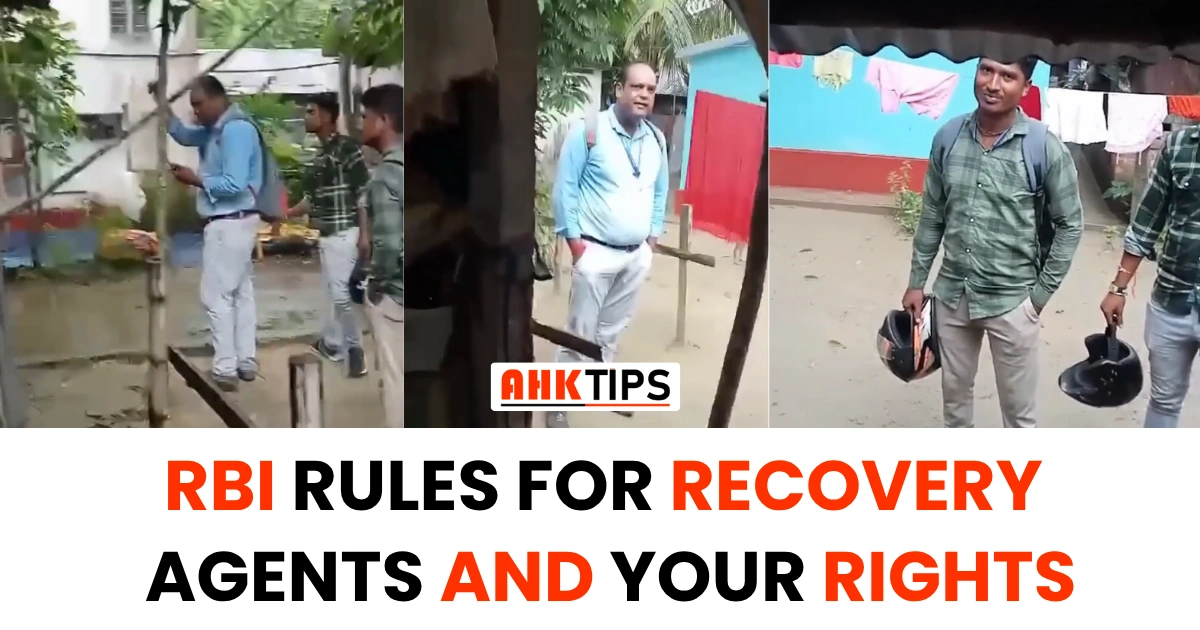
If your bank fails or refuses to assist you in agreeing to the loan, or there is harassment by recovery agents, or if an unfair settlement amount is quoted and found to be excessively high, then and only then can you approach the complaint to the Bank Ombudsman. It’s a simple and free process, and you don’t need to nominate any solicitor or pay any fee. You simply need to try to get it sorted out with your bank in the first instance. If they don’t respond within 30 days or you aren’t satisfied with their answer, you can complain to the Ombudsman.
The complaint can be made online, by email, or by post. Once your complaint is received by the Ombudsman, they will review the case and speak to the bank on your behalf. If needed, they will ask both sides to attend a meeting to sort out the problem. If the bank is guilty or has misbehaved with you, the Ombudsman can order the bank to refund your loan in a reasonable time or even grant compensation for delay or mental harassment.
Que: Can I go to the Banking Ombudsman for the settlement of the loan?
Ans: Yes, if your bank is not settling the loan request within 30 days or if they reply unjustly or unacceptably, then you can go to the Banking Ombudsman.
Que: How soon does the Ombudsman settle a complaint?
Ans: The Ombudsman usually settles a complaint in 30–45 days, depending on the type of complaint.
Que: What is the maximum amount of compensation I can get from the Ombudsman?
Ans: You can get a compensation of up to ₹20 lakh, and up to ₹1 lakh extra for mental harassment or delay, depending on the case.
Que: What do I do if I am dissatisfied with the Ombudsman’s decision?
Ans: If you are not happy with the final decision of the Ombudsman, you can appeal to the Appellate Authority within 30 days.
Que: Can I complain about loans availed from private banks or NBFCs?
Ans: You can complain against scheduled commercial banks, regional rural banks, and scheduled primary co-operative banks. For NBFCs (Non-Banking Financial Companies), there is a similar process under the RBI Integrated Ombudsman Scheme.

Founded in 2015, Ahk Tips is a New Delhi-based financial advisor specializing in debt relief and loan management solutions.